Read-only archive. Accounts and comments are unavailable. Browse the archive.

WiFilmFest2012: Review of "Tomboy" (screens again Sunday)
Tomboy screens again Sunday at 6:30 p.m. at the Orpheum Theatre
France | 2011 | 82 min | HDCam |
In French with English subtitles

Though the issue of transgendered children has been popping up in the media more often lately, the topic is still all-too often given short shrift in how it's covered--if we talk about it at all. There are so many misconceptions about what it means to be transgendered, even among the well-meaning, that people familiar with the subject have mostly come to expect any big screen representation to be terrible.

What director Céline Sciamma has done with Tomboy, however, is almost (almost) entirely free of the usual tactlessness with which the topic is discussed and portrayed.

As far as the movie shows us, the main character (a superbly cast Zoé Héran) is Mikael, an adolescent boy born into the biological body of a girl. This isn't the story of a little girl who simply likes to play with the boys and dress in traditionally boys clothing, as the title might misleadingly suggest. This is much more the story of a young transgendered boy going through the serious trials and tribulations that growing up in a binary society entail for such a person.

Mikael has just moved to a new town with his family--father, pregnant mother, younger sister (the completely adorable Malonn Lévana). This affords him the opportunity to present himself to the other kids in the neighborhood as himself, Mikael, rather than the girl identity, Laure, that he's been given.

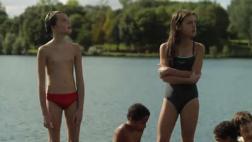
The movie is full of beautiful cinematography, with many sequences simply showing the children at play--kicking around a soccer ball, getting into water fights, daring each other to swap chewing gum. Sciamma seems to have a knack for allowing children to be children in her movies, the script reflecting not an adult injecting her worldview and words into the mouths of babes, but rather all those silly, awkward, and plainly profound moments of actual childhood.

Mikael isn't subversive. He's not playing a game. To the movie's credit, it never shows him in any other light than that--a boy trying to fit in, wanting to be part of the group, and struggling with the body into which he was born. How to approach a day at the lake swimming with his new friends? How to handle a game of shirts vs. skins soccer? What about the cute girl who takes an interest in him?

WiFilmFest 2012: Dane101 contributors discuss "Sleepless Night" (screens again Saturday)

aka Nuit Blanche
France | 2011 | 102 min | Blu-ray |
In French with English subtitles
Screens again Saturday, April 21 at 9:30 p.m. at the Orpheum Theatre.

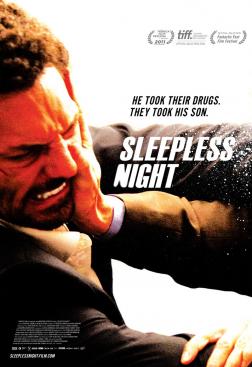
Last night's screening of Sleepless Night was full of dane101 press geekishly anticipating the hype of what some have called the best action movie of last year. Here are some of our reactions to the film:

Michael Donnelly:

Sleepless Night had all the virtues of a top-notch action movie: It established its protagonist quickly but in a way that made us care about him. If you can't root for the hero, you aren't as invested in the film. It kept up its pace. Not every moment of the central action was frenetic, but even the slower moments had more than enough tension to keep the audience fully engaged. It had novelty. Sleepless Night is set entirely in one large nightclub, racing through its dance floor, pool hall, boss's office, private bar, parking lot, bathrooms, and kitchen. Seriously. There are at least five scenes set in bathrooms, and the best fight sequences are in the kitchen. Finally, the characters in it are smart. No plot point hinges on someone doing something foolish or out of character. I was reminded of points in Bound where clever people are trying to outsmart one another while thinking and acting quickly.

Adam Schabow:

After a bit of a rough start, with the Blu-Ray skipping throughout the first scene, the lovely folks at Sundance quickly resolved the issue and BAM, the movie took off in high gear, never letting up on the gas. While watching Sleepless Night all I could think about was "Die Hard in a Parisian Night Club," but then again, even Die Hard had a few quiet moments of introspection. But that's the beauty of Sleepless Night; after having a few drinks and being exhausted from work, I didn't need any of that extra talky talk. I just needed action. And that is what I got.

Russell Reed:

I really enjoyed the cinematography and action scenes. The action was frenetic yet still easy to follow thanks to the excellent use of environment, choreography, and the camera remaining relatively steady. The pacing for most of the film was also done well, giving the audience breaks to catch its breath. The twisty plot was well-anchored by the main character's motivation and drive, and actually provided a heart that is seldom seen in action flicks. In addition, there were nice moments of humor sprinkled throughout, arising from situations and the reactions of ordinary people.

Planned Parenthood suspends nonsurgical abortions “until further notice," citing vagueness of new law

Weeks after Gov. Scott Walker signed new abortion restrictions into law, Planned Parenthood of Wisconsin is ceasing the administration of medication-induced abortions until the organization can develop strategies for compliance.

The suspension comes in response to Act 217, the Coercive and Webcam Abortion Prevention Act, signed by Walker along with other controversial bills on April 5, and which takes effect today. Among other requirements, Act 217 adds new hurdles for abortion providers who offer medication-induced abortions, and felony penalties for noncompliance. Women who take abortion-inducing drugs must now return to the same provider who administered the drugs within 12 weeks to “confirm the termination of the pregnancy and evaluate the woman's medical condition.”

Furthermore, if a woman does not return to the facility that provided the abortion for followup care, whether because she prefers to see her own doctor or has difficulty getting to the clinic, it’s still the provider who is penalized.

About 25 percent of women seeking to terminate a pregnancy with Planned Parenthood choose to use the nonsurgical option--or about 1,200 women in 2010. The organization will still offer surgical abortions for women seeking to end pregnancies.

In a medication-induced abortion, a doctor administers the drug Mifepristone, which blocks the hormone progesterone in the woman’s body. Without progesterone, the lining of the uterus deteriorates and the pregnancy cannot continue. Medication abortions are often used in the first nine weeks of pregnancy, and are not the same as emergency contraception, an over-the-counter contraceptive that prevents pregnancy from occurring within five days of a woman having unprotected sex. Planned Parenthood Vice President of Patient Services Deb Bonilla said in a press call Friday that women choose it as a less invasive process that they can go through in the privacy of their homes.

“There is no anesthesia,” Bonilla said. “Women may feel more in control of the situation because it’s a less invasive procedure.”

And in the case of some rare medical conditions, Bonilla said, medication might be a woman’s only option. For example, one clinic recently treated a woman with two uteruses, who would have risked perforation if she had undergone surgery.

“Regardless of how many women this ends up impacting, the bigger message is that this is basically politicians in the state government compelling women to have a surgical procedure as opposed to a medical option that might be more appropriate for her,” Public Policy Director Nicole Safar said. “They create new burdens for physicians to comply with and they don’t give us any direction in how to comply. They attach a felony for noncompliance. It is too ambiguous for us to put our doctors at risk like that.”

WiFilmFest2012 Screener Reviews: "Into The Wake" (screens Saturday)

Into the Wake
USA | 2012 | 78 min
Bartell Theatre, April 21, 11:15 a.m. (Rush Tickets Only)

John Mossman's Into The Wake, shot in Chicago and Sauk County, hinges on a constantly renewed sense that everything has suddenly become foreign. Every so often Mossman and co-writer Tim Miller just throw a switch, and most of the time they do so with a sharp instinct for thriller storytelling. Through these abrupt shifts, Wake reveals a story about a vicious family feud coming back to haunt a man, and deftly works its way to a conclusion that is infuriating, not because of who dies but because of who's left behind. But to explain it, you really do have to start from the beginning, which is so far from where things end up.

Miller plays Kyle, alias Ken, who begins the film as an instantly likable truck driver in Chicago. He's a man who gives his girlfriend Simone (Kristin Anderson) piggyback rides on her birthday, a man who can't help but come off as tough, but also meek. But Mossman and Miller say a lot about these two without having to explain much: "Hey, we don't go backward," Kyle gently says when Simone begins to cry about some painful memories of her own. (Again, Ken/Kyle thinks he has escaped who he used to be, and the stuff he's about to get pulled back into couldn't be further from his mind.) In an actually very funny Annie Hall tribute, Kyle and Simone sit on a park bench and make up stories about passerby: "Her name is Terry Frowsenbottom... [she] works in a lab sniffing people's butts."

There's something unresolved and furious lurking under this pleasant existence, and cinematographer David Clawson helps Mossman expose just enough of that via small, often cryptic cues: An ominous note hidden in an Oreo, a woman splayed out dead in a yellow dress, a fussy phone call from someone who's "just a temp" and wants to avoid bad karma, an edit in which Kyle goes from silver-bearded blue-collar to practically being Skylar's boss from "Breaking Bad."

WiFilmFest 2012 Review: Margaret (screens again Friday)

Margaret is a movie where the characters talk about talking and argue about arguing; I'd wager more screen time is devoted to characters defining words than in WFF2003's Spellbound.

On the one hand, boy, does that sound like a pantload; but on the other hand, damned if the fights of the characters in Margaret don't sound a lot like my fights, and I was there with the characters for every moment of heartbreak, especially the little brittle ones. The movie, shot in 2005 but unable to be assembled into a studio-approved version until its token release last year, became a critical darling (Google #teammargaret) despite writer/director Kenneth Lonergan's grudging-at-best approval of the theatrical cut. There's no question that Margaret's seams show, but Lonergan's home-video director's cut is going to be something to behold because what's here is gold. This version works: The movie moves forward with a terrible, inexorable logic, and while a few things seem unresolved and insufficiently motivated, at worst they're missing digits on an athlete's body. This is the prime-time movie at the Orpheum Friday; I strongly recommend it ... but many folks vociferously don't recommend it, so let me bolster my endorsement.

It doesn't spoil Margaret or the most recent Best Foreign Film Oscar winner A Separation to say that they are very much alike, beyond just being amazing movies. They're stories incited by an accident, and subsequently about a daughter who knows what the right thing to do is in an awful situation involving the law, but risks letting herself be hornswoggled by adults, including and especially her estranged-from-one-another parents, who spin out all kinds of loopholes, provisos, cul-de-sacs and pieties to ensnare her, however unwittingly. In each movie, the loss of this innocence, and the inability of the parents to recognize that they're taking it, struck me hardest. (In A Separation, the director cast his own daughter as the daughter; in Margaret, Lonergan cast himself and his wife as the parents.) But while the daughter in A Separation is primarily a catspaw of one all-encompassing predicament, Margaret's main character, Lisa (Anna Paquin), is experiencing the full bloom of high school-era adolescence, of which her interactions with the law are only a part.

Breakfast Links: April 20, 2012

Today is April 20, 2012. On this day in 2010, the Deepwater Horizon oil well exploded in the Gulf of Mexico. Eleven workers were killed and another 17 injured, and the resulting spill of about 4.9 million barrels of oil lasted six months, with ecological consequences still lingering today.

*BB: Wisconsin Club for Growth keeps shoveling--two ways.

*MAL: Wisconsin State Journal flubs own Pullitzer news.

*CD: As Team Walker implodes.

*C3K: Voter ID case won’t be resolved before recalls.

*MJS (paywall): Van Hollen appeals redistricting ruling to U.S. Supreme Court.

*WSJ: DNR overrules regional planning commission, approves Verona expansion.

WiFilmFest 2012: Interview with "Points of Interest" band Junipar Tar (screens Thursday)

[url=http://wff.to/GNTMKw]Points of Interest[/url]
USA | 2011 | 75 min | Blu-ray
Thu, Apr 19 | 9:30 PM
Union South Marquee

From the Wisconsin Film Festival website:

In the summer of 2010, a group of filmmakers accompanied Milwaukee-based indie rock band Juniper Tar and Pennsylvania's Strand of Oaks on a 10-day tour of the American East Coast. The resulting film is a document of the tour, but it sidesteps many of the conventions associated with the "rock doc," providing little in the way of backstage drama or interpersonal relationships. Instead, the film pairs intimately rendered performance footage with observational snatches of "down time," highlighting the sights and sounds the bands encounter in their travels. Confidently allowing their film's ostensible subjects to fade in and out of their surroundings, the filmmakers capture the feel of being on tour, from the offhand anecdotes of coffeeshop baristas to tadpoles in a stream to campfire sing-a-longs.

Adam Schabow interviewed Junipar Tar's Jason Mohr in advance of Thursday's screening.

[b]What type of band is Juniper Tar?[/b]

We’re just a rock band in the same way Springsteen or Tom Petty play rock music. However, we gravitate equally towards folk, rock, noise, punk or country.

[b]Please name the members in the band?[/b]

Jason Mohr - Vocals, Guitars
Aaron Schleicher - Guitar, Vocals, Keys
Tuc Krueger - Drums
Ryan Schleicher - Bass, Vocals
Chris DeMay - Piano, Guitar, Organ

[b]Ok, who played to the camera the most? Who was the biggest ham out of your band?[/b]

Really, we were excited to be a part of this film because it doesn’t involve us as people. We’re in it playing music, but we’re definitely not “starring” in it, so there are really no instances of “hamming it up” for the camera.

[b]Where did you go in the 10 Day Tour?[/b]

It was a short tour from Milwaukee to the east coast, so we hit about 6 or seven cities on our way to NYC.

[b]Were you friends with Strand of Oaks ahead of time?[/b]

Yes, we played a few shows as the backing band for Tim Showalter (Strand of Oaks) on our way to SXSW in 2010.

[b]Did you know the filmmaker? How did this idea start?[/b]

Yes, we’ve admired Anthony and Jon’s work so we invited them to film us playing in the basement of a club in Milwaukee back in 2010.

[b]How weird was the experience of having the camera follow you around?[/b]

It was only weird when we didn’t understand how this project was going to end up.

WiFilmFest 2012 Screener Reviews: "The Alpha Incident" (screens Friday)

The Alpha Incident
USA | 1978 | 86 min | 35mm
UW Cinematheque, April 20, 9:15 p.m.

A print from the vaults of the Wisconsin Center for Film and Theater Research (WCFTR), The Alpha Incident (1978) is a piece of old-school science fiction from Wisconsin filmmaker and two-time gubernatorial candidate Bill Rebane. Rebane is known for having shot many of his low budget films, including this one, in and around Gleason, Wis. The frugality of the production is evident, though like many other movies of this era, that actually adds some to its charm. I mostly enjoyed The Alpha Incident, despite it being a little slow and not in any way the gore-fest I’d been anticipating. As an example of cheap 1970’s sci-fi, it’s a cheesy good time.

The film’s premise is nice and straightforward. A space probe has brought back a strange virus from Mars. Following an accident that leads to a small group of people becoming exposed to it, they are quarantined in a cramped train station in the middle of nowhere. From that point on the main focus is on those six people, confined to their new living space and cut off from society.

Digging deeper into the details, there are two facets of the story that I really liked. The first is that only one member of the group knows for sure that he’s been infected; the others have no way to be certain about themselves. Secondly, the virus can only kill you when you fall asleep. Put these together and you end up with everyone needing stay awake for as long as they can until help arrives. Anyone who risks dozing off could be a goner! Now keep in mind, this was six years before A Nightmare on Elm Street, so the “sleep equals death” concept must have been pretty creepy to audiences when this was first released. Bodies need to rest at some point, so you know it’s only a matter of time until someone succumbs. Plus, the fact that some of them might not actually be infected adds a nice extra layer of tension.


WiFilmFest 2012 Review: Kinyarwanda (screens Friday)

Kinyarwanda
Rwanda, USA | 2011 | 96 min | HDCam |
In English and Kinyarwanda with English subtitles

[b]Kinyarwanda plays again 5:30 Friday, April 20 at the Union South Marquee.[/b]

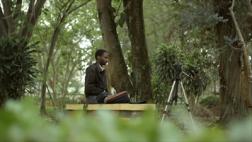
I would have expected a film about the 1994 Rwandan Genocide to be about the horrors, the event, and the magnitude of human suffering, but director Alrick Brown takesKinyarwanda it in a different direction. While statistics can describe the scale of the event - members of the Hutu majority murdered at least half a million minority Tutsis in a hundred days - they don't convey the effect this has on people. Brown puts a human face to it with characters who aren't heroes or villains.

The film weaves together short stories in a similar fashion to Pulp Fiction, presenting them non-sequentially and having main characters serve as minor ones in the other stories. The reason behind sharing characters is obvious, showing how people are connected even if they don't know each other. The out-of-order presentation works well with the decision to hint strongly at the brutal violence without showing it. It would be easy to show "chopping" attacks with machetes, but American audiences have been desensitized to such things; Kinyarwanda shows us how people react and what it does to them. More subtly, the film telegraphs most of the murders by placing them after scenes where we learned what happened. There are no horror movie boo moments to startle you. From the other direction, when you have seen a character in a later scene, you know she will survive this one and can focus on what's happening instead of biting your nails worrying about what could befall her.

WiFilmFest2012 Screener Reviews: "Oslo, August 31st" (screens Friday)

Oslo, August 31st
Norway | 2011 | 96 min | 35mm |
In Norwegian with English subtitles
MMoCA, April 20, 8 p.m.
MMoCA, April 21, 6 p.m.

Oslo, August 31st stirred up mixed reactions in me. The dialogue and performances are wonderfully realistic and the camerawork is arresting. However, the movie suffers from a meandering plot and a main character that never earned much of my sympathy.

The film is about Anders, a recovering drug addict going into Oslo for a job interview. Along the way he meets up with friends and struggles to find meaning to his existence. The film effectively uses long takes to heighten tension and to give the film a more documentary-like feel. Adding to that feel are the authentic conversations and strong performances from the cast.

My primary issue with the film is the main character. Anders says that he no longer feels any emotions at all, but when confronted with obstacles he becomes angry and put-off. He refuses to understand where other characters are coming from, and instead is so focused on himself that I became frustrated with his actions. I wanted him to change, but he stubbornly remained pessimistic. On the one hand, I appreciate this deviation from the norm, but on the other hand it made for a very unsatisfying character. He wants to find something to live for, but fails to appreciate what he has.

WiFilmFest 2012 Screener Reviews: "Putin's Kiss" (screens Friday, Saturday)

Putin's Kiss
Denmark | 2011 | 82 min | HDCam |
In Russian with English subtitles
Union South Marquee, April 20, 1:15 p.m.
Sundance Cinema 2, April 21, 4:45 p.m.

Putin’s Kiss is not only a remarkable snapshot of politics in modern Russia, it’s a fascinating look at how the personal and political collide in the life of a young woman.

Opening with vibrant footage of an energetic summer camp followed by dark, blurry video of a savage beating, this documentary prompts the question of how these events are related. The summer camp is put on by the Nashi youth movement, a political activist group with ties to the Kremlin. Our insider perspective on this group is provided by Masha Drokova, a journalist and spokeswoman for Nashi. She believes in Vladimir Putin’s vision of Russia and initially sees Nashi as a great opportunity for personal growth and to help her country.

Masha’s social circle eventually encompasses journalists critical of Putin, like Oleg Kashin. Oleg and the other opposition journalists open Masha’s eyes to see the cracks in Nashi’s manufactured facade. Two sides of Nashi are revealed; the public, socially conscious side and the shadowy, militant side. We learn of their techniques for disrupting opposition rallies and see their demonizing rhetoric in action. Masha's new friendships start to conflict with her public, political persona and she must choose between them.

Walker defends Equal Pay Law repeal as advocates celebrate Equal Pay Day

After quietly signing legislation to repeal the state's 2009 Equal Pay Law, Gov. Scott Walker broke his silence on Tuesday to reveal his reasons for doing so, claiming that trial lawyers had been using the bill to "clog up the legal system."

Walker signed the repeal on April 5, along with several other controversial bills, without a signing ceremony or statement.

The Equal Pay Enforcement Act had been designed to protect employees from workplace discrimination by giving them more ways to press charges, specifically allowing them to plead their case in the more accessible, less costly state court system - as opposed to federal court.

In an interview with WLUK-TV Walker gave his reason for undoing those protections: "In the past, lawyers could clog up the legal system," the governor said. "Instead, the state Department of Workforce Development gets to be the one that ultimately can put people back and give them up to two years back pay if there is reason to believe there was pay discrimination in the workforce."

During the two years the law was in place, however, not a single wage discrimination lawsuit was filed. In fact, Wisconsin's ranking for wage disparity between men and women rose from 36th in the country in 2009, when the law was first passed, to 24th by 2012, suggesting that the threat of state-level lawsuits may have been enough to push employers toward a more equitable pay system - though women in the state still only make 77 cents for every dollar earned by men for doing the same work.

Tuesday also marked Equal Pay Day, the date on which advocates say women in the U.S. finally reach the same amount of pay that men achieved in 2011 alone. Rep. Kelda Roys (D-Madison) and the Wisconsin for Falk PAC both held separate rallies to mark the occasion at the Capitol.

WiFilmFest 2012 Review: Two Years at Sea

Two Years at Sea
United Kingdom | 2011 | 86 min | 35mm
documentary | section: New International Documentaries
Wisconsin

Two Years at Sea answers some of the most pressing questions on the minds of moviegoers as they spend nearly ninety minutes of their lives sitting next to total strangers in a packed theater. Questions such as: “Exactly how long will it take for me to get bored and start fidgeting after watching the protagonist fall asleep for a second time?” (about 30 seconds) or my personal favorite, “Does a documentary really need to include a scene with the protagonist taking a shit? (No)

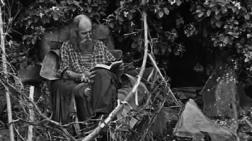
Ben Rivers’ experimental documentary follows Jake, a older man who chose to abandon civilization and live in a dilapidated house in a forest. Throughout the film, Jake constructs a treehouse, a raft from an inflatable mat and other found materials and does some laundry and cooking. Jake was the subject of some of Rivers’ earlier short films, and is indeed a real man who chose this solitary life in the wilderness.

The absence of dialogue has a startling effect on the film, as does the lack of color. The film is grainy black and white, and was shot on 16mm and subsequently blown up to 35mm. At times, both give the film a serene, almost eerie quality, especially in the scenes where Jake is adrift on his makeshift raft or when Rivers pans out to look at the landscape in the winter.

Breakfast Links: April 19, 2012

[i]Today is April 19, 2012. On this date in 1983, comedians worldwide paused for a moment, awash with an feeling that something momentous had occurred without knowing why. On the same day, Wisconsin's Black River briefly ran black. Potamologists cited ash from a fire farther north, but residents remained skeptical. Perhaps most strangely, investigators in Roswell noted an absence of UFO activity for the entire week; one expert said "It's like they all had somewhere else to be." [/i]

[i]Only years later would the meaning of these events become clear. A Madison based team of Fortean researchers, half drunk at an event at the Frequency became confident they knew the answer, but several more drinks into the night one of the researchers - Brian says it was Anthony, but everyone else thinks it was probably Brian - spilled his drink on the notes, ruining them. The following morning they knew they'd found the answer, and while it remained on the tips of their minds they haven't yet been able to recall exactly what it was.[/i]

* 77S: Wisconsin Film Festival: Tips for last-minute moviegoers to attend the fest

* FL: "...The council tripped all over themselves trying to convince themselves that they really cared about homelessness and affordable housing, but came up with excuse after excuse, helped by city staff, about why they had to vote to evict homeless people from their limited shelter and a place they spend with their new family that they call home."

* CP: "While there is a need to deal with homeless people, a most troubling problem that needs a real solution, there is also a time and place to contemplate ideas on how best to handle this social problem. Pulling a theatrical move by trying to keep the Occupy camp from closing at this late date was not a serious move to deal with the homeless issue. This move angered more people than help shine a light on the issue of being homeless, and that is sad. "

* CT: R Place owner fined $5,000 for holding parties after court ordered bar be closed

* DC: Nine Associated Students of Madison members face potential removal for alleged violations

WiFilmFest 2012 Preview: Grey Matter (screens Thursday)

Grey Matter
Matière Grise
Rwanda | 2011 | 100 min | Digibeta |
In French, Kinyarwanda with English subtitles

Despite its name, the organ that Grey Matter wears on its sleeve is its heart. Many Wisconsin Film Fest attendees, in my experience, prize just that quality in their selections, and if you'd like to see a bleedingly heartfelt movie about young Rwandan director Kivu Ruhorahoza's view of life in his country, this won't disappoint. Still, as the title promises, the movie wants to move past melodrama into an intellectual treatment of its subject -- although, as often happens with first-time filmmakers, the line between intellectual and overthought is a scribble.

But suggesting Grey Matter is "overthought" probes our interesting relationship with foreign films. For as long as they have been considered by American audiences to essentially be their own genre, that ineffable otherness determines how we reckon them. Some process -- the way subtitles distance viewers from vocal delivery, the spot-the-difference variations in national cinemas, something -- prompts us to evaluate these movies with a different yardstick, and a preferential one at that. In many cases, narrative cinema has so many fundamental similarities that it's a reasonable exercise to ask yourself how your opinion of a given movie would change if, rather than looking at unfamiliar faces, you were looking at Viggo Mortenson and Naomi Watts. Is that imagined movie still as gripping as what you're watching, or does Hollywood-washing it reveal that the beloved foreign title is just another marital drama with too many establishing shots?

WiFilmFest 2012 Screener Reviews: "Michael" (screens Thursday, Sunday)

[url=http://guide.wifilmfest.org/Event.aspx?id=2820]Michael [/url]
Austria | 2011 | 96 min | 35mm |
In German with English subtitles
Madison Museum of Contemporary Art, April 19, 9 p.m.
Madison Museum of Contemporary Art, April 21, 3:30 p.m.

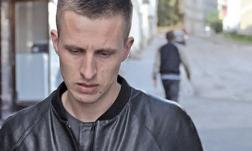
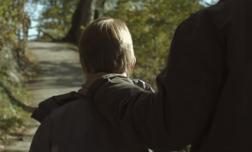
Society is uniquely incapable of processing the kidnapping and long-term captivity of a child. When Jaycee Lee Dugard was freed in 2009, after 18 years of isolation in a California man's backyard, an Orange County Register columnist welcomed her back to civilization with a personalized rundown of all the sports milestones she missed. ("It doesn't sound as if Jaycee Dugard got to see a sports page," begins this blundering understatement of a piece, for which the writer and paper later apologized.) Many unspeakable crimes can at least be comprehended as a moment, an act, a product of rage or mental disorder, but the deliberateness of the scope of holding someone in your home for months or years is elaborate and terrifying on a whole different scale. Most of us can't cope with the idea, because there's not much that could possibly equip us for it. It's also impossible to prepare for Michael, a slow-moving chronicle of a horrid little man and the 10-year-old boy who has lived in his basement for an unspecified length of time.

Writer-director Markus Schleizner's film comes from Austria, home two at least two such notorious cases. Wolfgang Prikopil kidnapped a 10-year-old girl in 1998 and kept her in his Strasshof home for eight years, committing suicide when she escaped. Josef Fritzl is currently serving a life sentence for imprisoning and fathering several children by his daughter in Amstetten.

WiFilmFest2012 Preview: "Last Day at Lambeau" (screens Wednesday, Saturday)

Green Bay is not a typical National Football League town. Residents of the state own stock in the Packers. Stars are adorned and children named after them. Local children lend their bikes to players to ride during training camp. These relationships can last through adulthood, with some individuals receiving Christmas cards from former players.

The Packers are more than just a sports team, they are family. And when the parent of that family decides to try his luck with the girl next door, a messy divorce follows.

Breakfast Links: April 18, 2012

Today is April 18, 2012. This is the first day of the 14th Annual Wisconsin Film Festival.

[b]* BH:[/b] City Council stands firm on closing Occupy siten

[b]* WKOW:[/b] Attorney General J.B. Hollen continued avoiding comment on thousands in merit bonuses awarded to state Department of Justice employees

[b]* Bice:[/b] Walker lists debt of $55,000-plus for John Doe lawyers

[b]* TCT:[/b] [url=http://host.madison.com/ct/business/biz_beat/the-lowly-renter-as-housing-bust-drags-on-state-rolls/article_6545590e-88dc-11e1-9231-001a4bcf887a.html#ixzz1sOURIGpK]As housing bust drags on, state rolls back tenant protections
[/url]

[b]* WSJ:[/b] State's public schools shed more than 2,300 positions in 2011-12 school year

[b]* C3k:[/b] 2 state lawmakers won't run for re-election; Rep. Tamara Grigsby says incivility in Legislature affected her health

[b]* MC:[/b] South Madison residents identify need for neighborhood centers to share skills and ideas

[b]* TDT:[/b] Could WSJ editorial board be elected?

[b]* TCO:[/b] I made my first stop at the Bakers Window today, located just off Madison’s Capitol Square at 122 State Street.

[b]* MT:[/b] New Glarus, Point Make Brewers Association’s Top 50 List

[b]* LFH:[/b] It's Poetree Month, when poems grow on trees like leaves

[b]* AVC:[/b] The A.V. Club's guide to Record Store Day events in Madison

WiFilmFest 2012 Screener Reviews: "Chekhov For Children" (screens Thursday, Friday)

Chekov for Children
USA | 2010 | 72 min
Monona Terrace, April 19, 8:15 p.m.
Monona Terrace, April 20, 4:15 p.m.

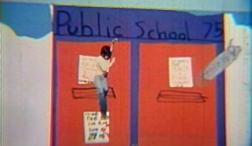
Chekhov For Children isn't a clever or even especially well-paced documentary, yet filmmaker Sasha Waters Freyer clearly appreciates the level of neuroses and mess of potential questions that her subject matter presents. Freyer looks back to her days in the experimentally inclined New York City public school, where in 1979, teacher Phillip Lopate had Freyer's classmates perform Anton Chekhov's play "Uncle Vanya," and Freyer filmed the production on Super 8.

As Lopate acknowledges in an essay he reads aloud throughout the film, Chekhov's work is heavy with an "awareness of time running out." In other words, having 10- and 11-year-old children perform it would strike most rational people as a perverse, possibly even psychologically scarring exercise. Freyer sees that but doesn't try to dwell on the obvious incongruity or milk it for dark or quirky humor.

Instead, she has Lopate and her now-grown fellow cast members dissect the experience and discuss the unexpected ways in which children respond to the adult world. "I think 10 or 11 is a very knowing age," says Angus Johnston, who played the title role. In turn, Lopate explains choosing Johnston for the role by pointing out that Johnston was an unpopular kid, then describes Slim, the child who played Dr. Astrov, as "a strong, silent type." At this point, you can begin to drive yourself nuts by simply asking, who is projecting onto whom?