



Two Years at Sea
United Kingdom | 2011 | 86 min | 35mm
documentary | section: New International Documentaries
Wisconsin
Two Years at Sea answers some of the most pressing questions on the minds of moviegoers as they spend nearly ninety minutes of their lives sitting next to total strangers in a packed theater. Questions such as: “Exactly how long will it take for me to get bored and start fidgeting after watching the protagonist fall asleep for a second time?” (about 30 seconds) or my personal favorite, “Does a documentary really need to include a scene with the protagonist taking a shit? (No)
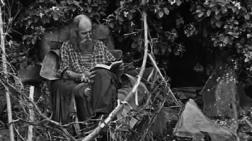
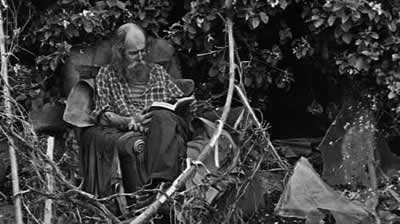
Ben Rivers’ experimental documentary follows Jake, a older man who chose to abandon civilization and live in a dilapidated house in a forest. Throughout the film, Jake constructs a treehouse, a raft from an inflatable mat and other found materials and does some laundry and cooking. Jake was the subject of some of Rivers’ earlier short films, and is indeed a real man who chose this solitary life in the wilderness.
The absence of dialogue has a startling effect on the film, as does the lack of color. The film is grainy black and white, and was shot on 16mm and subsequently blown up to 35mm. At times, both give the film a serene, almost eerie quality, especially in the scenes where Jake is adrift on his makeshift raft or when Rivers pans out to look at the landscape in the winter.
The sounds of nature, birds chirping, animals stepping on twigs in the forest, provide a soundtrack that is occasionally interspersed with some records Jake plays while working on his various home projects. Jake is mostly silent, only occasionally muttering to himself, and seems to completely forget he is being filmed at times.
Still, we don’t really learn much about our protagonist, even after observing intimate details of his daily life. Sometimes the camera zooms in on some old photographs, (Jake as a younger man?) but the faces in the photographs remain a mystery. It’s slightly frustrating, just like the long and drawn-out scenes watching Jake essentially do nothing but float on his raft for several minutes or sit by the fire in the final scene. While the film does succeed on some level with its avant-garde cinematography, it feels like it could have been edited down to 30 minutes or less with much more successful results, judging on the amount of people who snuck out before the credits rolled. Did this film really need to be 86 minutes long so the director could fail to reveal anything about the subject besides his affinity for nature and building treehouses? Probably not.