



Into the Wake
USA | 2012 | 78 min
Bartell Theatre, April 21, 11:15 a.m. (Rush Tickets Only)
John Mossman's Into The Wake, shot in Chicago and Sauk County, hinges on a constantly renewed sense that everything has suddenly become foreign. Every so often Mossman and co-writer Tim Miller just throw a switch, and most of the time they do so with a sharp instinct for thriller storytelling. Through these abrupt shifts, Wake reveals a story about a vicious family feud coming back to haunt a man, and deftly works its way to a conclusion that is infuriating, not because of who dies but because of who's left behind. But to explain it, you really do have to start from the beginning, which is so far from where things end up.
Miller plays Kyle, alias Ken, who begins the film as an instantly likable truck driver in Chicago. He's a man who gives his girlfriend Simone (Kristin Anderson) piggyback rides on her birthday, a man who can't help but come off as tough, but also meek. But Mossman and Miller say a lot about these two without having to explain much: "Hey, we don't go backward," Kyle gently says when Simone begins to cry about some painful memories of her own. (Again, Ken/Kyle thinks he has escaped who he used to be, and the stuff he's about to get pulled back into couldn't be further from his mind.) In an actually very funny Annie Hall tribute, Kyle and Simone sit on a park bench and make up stories about passerby: "Her name is Terry Frowsenbottom... [she] works in a lab sniffing people's butts."
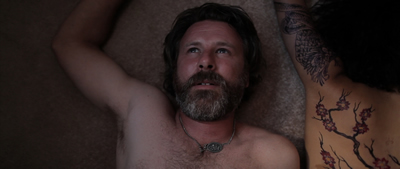
There's something unresolved and furious lurking under this pleasant existence, and cinematographer David Clawson helps Mossman expose just enough of that via small, often cryptic cues: An ominous note hidden in an Oreo, a woman splayed out dead in a yellow dress, a fussy phone call from someone who's "just a temp" and wants to avoid bad karma, an edit in which Kyle goes from silver-bearded blue-collar to practically being Skylar's boss from "Breaking Bad."
At this point the film begins to cut around a little more than serves the story. Bear with it. Kyle is passed-out in his backyard, then he's heading north on his motorcycle, then he's sleeping on the grass on the roadside. If it throws you, it's probably supposed to--the film needs that feeling of abruptly leaving behind relationships, roles, even identities, with no time to justify it or make sense of it. That said, the immediate signals—two dark figures on a bridge, the look on Kyle's face during a key phone call—keep the story moving ahead despite its own deliberate vagueness. If you ever feel a little lost or impatient, give the filmmakers a fat chunk of credit: This is a film that uses a fortune teller scene as foreshadowing, and pulls it off without a hint of cheesiness, thanks greatly to Anderson's feel for the scene's cycle of fear and relief.
But what makes Into The Wake a powerful film, as opposed to a merely stylish thriller, is a key pair of scenes that introduce hate into the story. The audience having that hate slam into it for the first time at the festival is a moment truly worth envying. Ken/Kyle is chained in a barn, tortured by a deranged woman, marched at gunpoint onto a remote island in the Wisconsin River, and it's all convincingly executed, yet these things are secondary to that excruciating emotional shift. With each change, the film speeds its plunge toward some inevitable horror. Where or why the feud began is never quite clear, but it clearly doesn't matter—what's happening can't be stopped, and must be accepted, and forget about having time to really process it. Mossman and Miller--with some help from UW-Baraboo film students--start by setting a friendly and humane tone, then work their way to the story's heart with a lean and cruel determination.