



Kinyarwanda
Rwanda, USA | 2011 | 96 min | HDCam |
In English and Kinyarwanda with English subtitles
[b]Kinyarwanda plays again 5:30 Friday, April 20 at the Union South Marquee.[/b]
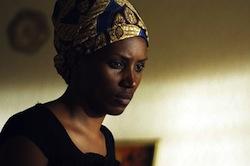
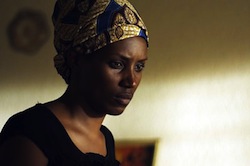
I would have expected a film about the 1994 Rwandan Genocide to be about the horrors, the event, and the magnitude of human suffering, but director Alrick Brown takesKinyarwanda it in a different direction. While statistics can describe the scale of the event - members of the Hutu majority murdered at least half a million minority Tutsis in a hundred days - they don't convey the effect this has on people. Brown puts a human face to it with characters who aren't heroes or villains.
The film weaves together short stories in a similar fashion to Pulp Fiction, presenting them non-sequentially and having main characters serve as minor ones in the other stories. The reason behind sharing characters is obvious, showing how people are connected even if they don't know each other. The out-of-order presentation works well with the decision to hint strongly at the brutal violence without showing it. It would be easy to show "chopping" attacks with machetes, but American audiences have been desensitized to such things; Kinyarwanda shows us how people react and what it does to them. More subtly, the film telegraphs most of the murders by placing them after scenes where we learned what happened. There are no horror movie boo moments to startle you. From the other direction, when you have seen a character in a later scene, you know she will survive this one and can focus on what's happening instead of biting your nails worrying about what could befall her.
A surprising theme in Kinyarwanda is forgiveness. With so many participating in the genocide, it would be infeasible to try them all fairly. The film's most moving scene is the trial of a genocidaire by Gacaca court. He gives his testimony to the people of his community. Without equivocation he admits to murdering a woman's parents and looting their house. He declares, "I am not a Hutu. I am a Rwandan." When he asks the woman for forgiveness, he neither insists nor begs. His tone makes it clear that he knows he's wrong and is not entitled to mercy, that forgiveness is something she may choose to bestow upon him. This recalls two earlier scenes. In one, a Hutu Muslim imam who has been sheltering a Tutsi Catholic priest gives the priest a cassock and stole. The priest, still surprised at his host's generosity for sheltering him, is taken aback by this gift. "You didn't have to do this," he says. The imam smiles and responds, "That's why it's a gift." In the other scene, a young man has just walked a women home and requests a kiss from her. "You don't ask for a kiss," she says. "A kiss is a gift. The woman should decide to give it to you." Forgiveness, too, is a gift.
Finally, by humanizing the participants on both sides of the genocide, Kinyarwanda makes it far more real. This isn't just something that evil people did in a far away land. Many of the genocidaires were not in the military or even a militia. They were members of a community and, for a time, they did things even they would likely have considered unthinkable. It's impressive when a film can not only help you understand something that happened in the world, but also make you realize that the people involved aren't meaningfully different from you and the people in your community.