



...continued from page 3...
[b]Mixed messages[/b]
Like Bayley’s album release party, most hip-hop events never generate a police report, leaving many to wonder why the campus bar culture - with its legacy of street brawls and sexual assaults - persists despite its own entrenched problems.
“The college bars play hip-hop,” says Evans. “But when fights break out no one talks about how those bars were being managed, let alone shutting them down. A lot of the time you don’t even hear about it.”
Some express disappointment with police chief Noble Wray, who is seen as placing political considerations above what’s best for Madison’s black community.
“Chief Wray is black, but he can’t say he’s for black people when he sends police to shut down hip-hop shows before they’ve even started,” says Jones. “There are plenty of things [he] can do to help; it’s just a matter of him wanting to do it.”
Shutting down hip-hop, Jones continues, takes money away from black entrepreneurs, and opportunities away from black kids that look up to black adults making legitimate money.
“The message he sends is, ‘Police are going stop you for doing something legal, and they’re going to stop you if you do something illegal. So you might as well do whatever you want,’” says Jones.
Dz also lashes out at local media for being quick to cover violence at hip-hop shows, while ignoring the numerous fundraisers and charity drives put together by the hip-hop community. “We do a lot of good in this community,” he says.
Dz notes that an article about the Christmas Eve incident at the Majestic was reported by The Capital Times three days after it happened, presumably because its reporters were on holiday. “You mean to tell me nothing else happened in those three days they could’ve written about?” he asks.
Dz also laments what he sees as news reports always being framed around “violence at hip-hop shows” as opposed to “violence at a bar,” which he says fuels negative attitudes toward hip-hop.
WKOW placed hip-hop as the backdrop to a double shooting at a Beloit bowling alley in November without confirming it, though its story did quote neighbors who said new owners had recently begun booking hip-hop shows.
Bill Novak, a Capital Times’ web reporter who wrote about the incidents at the Majestic and the High Noon says he mentioned the incidents occurred at hip-hop events because the information was readily available on the venues’ websites.
Contrarily, none of the numerous Wisconsin State Journal reports on the New Year’s Eve shooting at Frida’s on State Street mentioned the type of music played or who was playing it. Frida’s didn’t feature local hip-hop acts.
Moore likens attitudes toward hip-hop to those toward pit bulls. “They’re a great family dog, but because of a few irresponsible people they are seen as the most evil breed ever,” he says. “Let’s keep it real: There’s a stigma that only certain types of people have pit bulls. I have pit bulls, and I’m not a gangsta.”
In short, a few troubled party-goers have ruined local hip-hop for everybody else. Moore also suggests it’s the type of violence that is so jarring. Sure, the kids on campus may get wasted and brawl, but they’re usually not firing guns at each other.
Even problems that begin as simple fist fights have the propensity to spiral out of control, as on Christmas Eve at the Majestic. “Nobody fist fights and shakes hands after anymore,” says Moore. “It’s ten-on-one, with people getting stomped into the ground. They’re demolishing each other.”
[b]An uncertain future[/b]
All of Madison’s major venues continue to welcome national hip-hop acts, in part because they draw “a more diverse audience” without the problems that come with local hip-hop. Dethmers, widely respected for her long-time support of local hip-hop, wishes this wasn’t the case.
“We’ve always had extra security for local hip-hop shows, because we need it,” she says. “My experience is it’s not really incorrect to think there are going to be more problems at a local hip-hop show. I wish we could figure out a way to make them safe.”
Artists and promoters say there are ways to achieve this, but feel the city is content with dragging its feet.
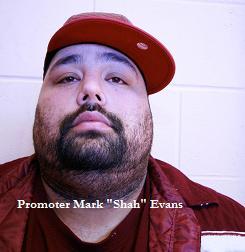
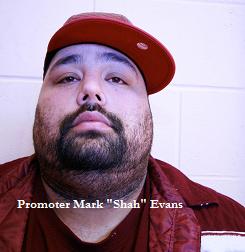
In 2010, Evans proposed a promoter-rating system, based on best practices, as a way for venue owners to discern a promoter’s reputability, but it never gained strong backing from the city.
Evers says zero-tolerance policies where guests are ejected upon the first signs of trouble are an effective tool.
Dethmers and Jones say denying entry to known troublemakers is yet another tool. “If we knew who it was causing trouble we could sort of blacklist those people and not let them in,” says Dethmers. “That’s been a frustration in general: There’s never anyone we can point to as the troublemaker.”
Moore, without a whiff of irony, says a so-called blacklist policy would be discriminatory. “Just because a person was a bad guy five years ago doesn’t mean he’s a bad guy today,” he says. “I don’t think police can just put out mug shots of people out there.”
Dz says the city ought to compile data comparing rates and types of violence at hip-hop events to other bar-related violence. He says the discussion is long on assumptions, but short on facts.
Among those who’ve gone through this before, there’s a sense that once the dust settles doors will again open to local hip-hop. Others aren’t as optimistic.
“This one I have a different feel,” says Evans. “Two years ago fights broke out, and it was hard to get a show. This one’s different; there have been shootings.”
Without an outlet, some have urged to take hip-hop underground, but Bayley says that’s unlikely. “I don't see how it would work, especially with law enforcement and city officials keeping an eye out.”
Regardless of whether hip-hop returns, Jones says the city and police need to get behind black entertainment in Madison - and not just one venue or an occasional show, but a variety of establishments that reflect the diversity within the black community.
He says frustration within the black community is rising fast.
“We’re on the verge of serious protests, and you don’t want it to go there,” he says. “You don’t like dealing with black people at a hip-hop event? Wait until we come together and start protesting and the city starts losing money due to blacks not coming to any events in Madison, blacks not shopping in Madison, blacks not riding the bus…”
Apologizing for his frustration, Jones adds, “I mean, instead of forming a task force to prevent a hip-hop show, form that task force that helps ensure a hip-hop show stays safe.”
Woulf says Mayor Paul Soglin is aware of the issue. When asked if the city and police would get behind encouraging more hip-hop shows as a possible solution – a way of spreading the risk, so to speak – Woulf equivocates.
“That could be one [solution],” he says. “But there are other things, like I said, to make sure you do everything you can to attract the widest possible audience… a lot does come back to those attending the shows.”