



...continued from page 1...
[b]Embattled scene[/b]
Madison isn’t a great place to live if you’re black. Only 48 percent of black children in Madison graduate with a high school diploma. Drug enforcement strategies targeting black neighborhoods have fed a county judicial system that locks up more blacks than most others in the nation.
And, if you’re black in Madison, odds are that you live in a poor neighborhood, for in Madison “black middle class” is an oxymoron of sorts.
Hip-hop, many feel, is now code for “black.”
All things considered, it’s easy to see how the marginalization of local hip-hop seems like yet another affront to the black community here. “I don’t want to say it’s racist, but what else is it?” asks Jones. “When they shut the shows down before they start, that’s certainly prejudiced.”
Madison has never developed a formal policy regarding hip-hop events, but restrictions, like having hip-hop events end earlier than others, do exist. Some believe the city threatens to place restrictions on the liquor licenses of establishments that book hip-hop acts, something Woulf denies.
“We will pressure establishments on their liquor licenses if we see a pattern of [violence],” he says. “That’s typically the biggest factor.”
Conversely, Woulf denies that those seeking a liquor license can curry favor by promising to never hold hip-hop parties. “What I want to know is how you’re going to manage a live show if you’re going to have them,” he says. “Hip-hop is not the problem; it’s how the events are managed.”
But the perception that local hip-hop is the target of an off-the-books crackdown is more than a suspicion borne on racial sensitivities, but rather one formed by fact that Madison police have shut down a number of hip-hop events before they even began.
Indeed, a number of incidents suggest that Madison police sometimes go great lengths to undermine the local hip-hop scene.
Jones, and others, say rumors that police have a special hip-hop taskforce that monitors Internet chatter about hip-hop events, street rivalries and crime have percolated through hip-hop circles for some time.
Efforts to reach police chief Noble Wray or members of his command staff about the shutdowns and the alleged hip-hop taskforce were unsuccessful.
Ahead of Pacal Bayley’s album release party at Scott’s Urban Wear on Madison’s west side last May, the store’s owner was visited by a detective from the Madison police gang unit who, citing a potential for violence, urged him to cancel the event.
“I told [the detective], ‘If this was a book store and this was a book signing, I don’t think you’d be here,’” says owner Scott, who asked dane101 to withhold his last name. “That pretty much ended the conversation.”
Bayley, who performs as DJ Pain 1, is often pigeonholed as a gangsta rap producer, but his repertoire is far more expansive. A gold-certified producer and one of the city’s pre-eminent beatmakers, he’s had DJ residencies at a variety of local clubs, and holds a master’s in English from UW-Madison.
“I’m the farthest thing from a gangsta, ever,” says Bayley, whose alcohol-free celebration went off without a hitch. During the event he gave albums away to fans and treated them to free snacks and soda.
In August 2010 Dion Jones was tying up loose ends for a show scheduled at Lutheran Baptist Church when he learned the landlord had put the kibosh on the event after police asked him to sign a paper making him liable should something go awry.
In response Jones says he asked police to help him draw up a security plan, or perhaps assign an officer to police the event, but was told the department “didn’t have the manpower to have police come.”
Jones drove by the church on the night the event had been scheduled and, to his dismay, he saw a squad car idling in the parking lot.
“On State Street there’s about twenty squad cars ready to protect and serve, but that’s not happening at black events,” says Jones, who lost $2,000 on the event. “That doesn’t happen at hip-hop events. I wonder how things on State Street would turn out if those officers weren’t there walking the streets.”
Hours before a New Year’s Eve hip-hop dance party on Madison’s east side, Big Mike, a radio personality on 93.1 JAMZ, received a call from police who asked him to cancel the show. He says an officer asked if the party had been funded with drug money after he refused to cancel it.
“When we got there to do the sound check there were officers everywhere!” he says. “They wanted to see paperwork for everything.”
Eventually, police contacted the property owner who canceled the event after police asked him to sign the liability form Big Mike says was drawn up by the city’s attorney.
The city attorney’s office didn’t return calls from dane101.
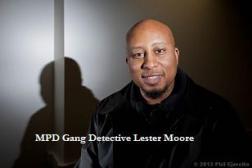
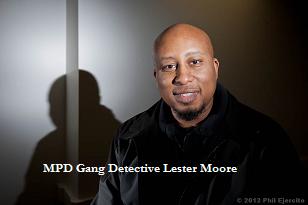
Gang Detective Lester Moore couldn’t comment on specific incidents, but says police do sometimes contact venue and property owners if they fear trouble will visit an event. Additionally, they’ll sometimes attend events to discourage troublemakers.
“One night we had some information that two groups that had beef might be at Frida’s, so we just came and stood outside,” says Moore, a Houston-raised African American. “If we have information it would be wrong for us not to say something.”
Moore denies police are taking a hard line against hip-hop. “We need hip-hop. We can’t do without it,” he says. “But we’ve got to find a way where we can do it in a safe environment.”
Bayley still doesn’t know what prompted the detective’s attempt to crash his party. “In [his] defense,” Bayley says, “we did buy dangerously large subs and cupcakes with colored frosting, which could have been mistaken for gang colors.”