



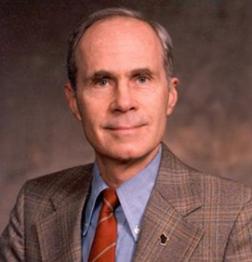
Doug La Follette isn’t officially running against Gov. Scott Walker yet. The 71-year-old Secretary of State, whose name first became famous last year when he used his office to delay the publication (and thus the actual enforcement) of Wisconsin Act 10, has only made one step toward actually running so far, and that’s filing papers with the Government Accountability Board.
But he calls himself serious about investigating the possibility, and, when his name was included in the most recent Public Policy Polling study, he fared nearly as well as the two Kathleens in a hypothetical match-up against Governor Walker. This interview, conducted on March 1, continues our series of candidate interviews (read about Kathleen Falk and Kathleen Vinehout).
La Follette has been re-elected to the position of Secretary of State every term since 1982, served one term as a state senator for Kenosha before that, and has made several bids for federal offices as well. So, is he running for Governor? La Follette says well, actually, he doesn’t know yet, but he filed papers so he could start investigating exactly how strong a candidate he could be.
“The mainstream media and the polls weren’t including me,” he says. “I wanted to get my name into the mix for discussion.” And, he says, the PPP poll is exactly the sort of thing he’s looking at when it comes to making the final decision.
“What was encouraging to me was that my negatives were quite low and 49 percent had not made up their mind yet,” he says. And ultimately, he says, he’s looking to find out what role he can best play in the drama that’s unfolded in the state since last year.
“My concern, and my goal ever since this thing started, is to defeat Walker. He’s been very bad for our state. Whether it’s education, health care, the environment, citizen’s rights, women’s rights, any of those issues, he’s been very, very bad. I can’t think of many people who can speak more clearly to that than I can, having been in public life for almost 40 years.”
He notes that, in his many travels around the country, up until now, people he’s talked to have always been very positive about Wisconsin. “It has a great progressive tradition and I was always proud to be from Wisconsin and be Secretary of State here,” he says. “But that’s changed. It’s been a very sad time for people like me.”
But he says he’s not bent on Walker’s replacement being him. “I’ve had a good life. I enjoy what I do. I don’t need to be governor. On the other hand, if there were some way to ascertain that I would be the strongest candidate, I’ll run. I’m a hard worker and an energetic person.”
But the best candidate, he thinks, isn’t out there yet. “If I had my druthers, I’d get Herb Kohl to run, because I think he’d be a unifying force. He’s well respected, and I don’t think he’d have negatives like everyone else has negatives.” Kohl’s money, too, he says could counter Walker’s. “He can spend $30 or $40 million if he wants to. So I think he would be a great transition governor, to get us back on track.”
La Follette, so far, has no staff, and has not started fundraising, for fear that he’ll need to give money back. He’s relying on feedback--on his Facebook page, in polls, responses to interviews--to determine his next steps. He plans to decide sometime in the next two weeks. “Now that I’m clearly out there and people are talking about it,” he says.
His fundraising goals are modest: a base amount of money for travel and media, but he has no illusions that Walker’s challengers can compete on money. “I don’t think any Democrat can compete in the big money TV business,” he says. Though, he adds, it’s going to be interesting to see what the super PACs end up doing.
If and when he does hit the campaign trail, he’s banking on support stemming from his refusal to publish Act 10, “when I basically said wait a minute, let’s slow this thing down and take a hard look at what’s going on.” He thinks educators will like him because of his background in teaching, and environmentalists because of his strong history with environmental issues, including his co-founding of advocacy group Clean Wisconsin.
“There’s a group of Democrats who would support me if I were the candidate,” he says. “Of those, there’s a big group that likes me because I’m not a liberal Madison Democrat.” Instead, he says, he thinks he’s seen as “a maverick Democrat,” and not “one of the good old boy politicians.” He cites his term as a state senator from Kenosha, in the early 1970s, when he pushed ideas--such as windmills to generate electricity--that his colleagues made fun of.
“I worked late in my office instead of playing poker and drinking with ‘the boys,’” he says. “I have run very low-budget, Bill Proxmire-type campaigns and not bought into the big money takeover on our political system.”
And as one, more current example of his independence, he notes the pledge Kathleen Falk made to veto any budget that does not restore collective bargaining rights. “When Kathleen made her response about vetoing the budget, I said, ‘I think that’s a mistake,’” he says. “I don’t think you make those kinds of commitments until you’re facing what the facts are.”
“I would make only one promise, and that’s to listen to all the people and not be in any one camp or faction. You don’t solve problems by being that way. I think people would like me for that kind of independence.”
But does he think he has anything to lose from the endorsements Falk has already garnered? Not really, he says. “First of all, it was far too early for them to make those endorsements. As we’re now learning, there’s other candidates out there and they didn’t even talk to me until after the endorsement.” He says he’s seen a good deal of negative response, when talking to people, and cites, anecdotally, an elderly woman who, after baking cookies for recall petition collectors all winter, still told La Follette she would vote for Walker if Falk were the candidate.
“There’s a feeling out there, and I think it has to do in part with these endorsements that people don’t respond to.”
“I would not spend a lot of energy trying to get endorsements,” he says. Rather, he says, he thinks that organizations in the state, whether they’re environmentalists or women’s organizations, rather than endorsing particular Democrats in the primary, should instead focus on getting their membership out to vote. “They’ve all got their own axes to grind with the Walker admin and they should all work within their structure. Whether they endorse me or anyone else, it’s not going to make a difference.”
Still, I ask, will union support be necessary to defeat Walker, given the union-heavy coalition that kicked off the protests last year?
“Certainly it has to be one of the components,” he concedes. “They’re one piece of the puzzle.
“But what can win the election is if groups get their people out to vote. At this moment it’s a people’s revolution. We saw that in the streets, we saw that with the petitions. If that holds, we can win. If people get tired, if too many of them watch too much TV and are influenced by advertising, we might not win. But I’m optimistic.”
Once in office, he says he thinks the divide in the Legislature can be overcome with dialogue: “I would talk to the Republican leadership. I would hope we could decide how to come together with limited resources and great needs in health care, education, and so on to make Wisconsin the kind of place we can all be proud of. But it will be hard. Obama has seen how hard it is, and things are almost as bad here as they are in Washington. Maybe worse.”
Given election-year restrictions on introducing new legislation this year, La Follette is looking at what he can do with executive orders, and appointing new people to head state agencies before bills can start passing again next winter. “A new governor can be a leader in trying to help new progressive people get elected to the Assembly or Senate,” he says. “That’s all me or another governor could do this year.”
And he has no illusions about the ability of even a progressive-minded governor to make progressive-minded change. Finding the money to restore health and education funding will be hard and slow. “Even next year, given the budgetary situation, we’re not going to have a lot of money to start spending,” he says. “We’re going to have to figure out where we can spend what money we have most effectively. It’s not going to be any magic thing. The European economy is still collapsing, things in Washington don’t look great. They keep saying a few thousand jobs here and there but there was just an announcement the other day that another company’s going to lay off a couple hundred workers. These are tough times.”
So what, exactly, would he change? “Obviously,” he says, he’d like to repeal Voter ID and restore or modify collective bargaining rights. He’s also got his eye on environmental laws Republicans in the Legislature have tinkered with: air pollution, wetland regulation, and, if a mining law ends up passing that significantly undermines water protections, that, too, would need to change.
And, again, he’s not going to make promises. “I think any candidate that promises X jobs in my term is a fool, because you can’t control that kind of promise,” he says. Furthermore, he says, undoing the past year and going back to “the Doyle times” is not all Wisconsin needs. “Even then, we had tough budgetary problems. Doyle furloughed employees and cut money from the University, and he’s a fairly progressive guy.”
He sees a model, though, in the current governor of Maryland, Martin O’Malley, who’s investing in education in a way that, La Follette thinks, Wisconsin might be good to model. He’s also interested in what academia has to offer by way of advice--like, for example, the La Follette Institute for Public Affairs.
Lastly, I ask him why, after so many years in an office that required no real platform, he was vying for something so partisan as the gubernatorial recall. “All my life I’ve wanted to change things,” he answers, noting that in his first ever election, running for U.S. Congress, he lost only in a recount. “I ran at that time because of the war on Vietnam, and because of environmental issues I was concerned about. I was at Columbia when the war was at its craziest. Then Earth Day happened, and all the black smoke pouring out--that motivated me. I’ve always been motivated by serious issues--I’ve always cared about issues rather than being elected for the heck of it.”
“I’ll be candid enough to say that I’ve not succeeded at achieving political offices that could have an impact on some of those issues,” he continues, ticking off his unsuccessful elections--two for Congress, one for U.S. Senate, and another for lieutenant governor. “I didn’t achieve those positions where I might have been more able to affect the issues I care about.”
But he went on to spend time working for NGOs, as a public affairs director for the Union of Concerned Scientists, and later as a presidential appointee on energy issues. And following his successful run for Secretary of State, he’s used his profile in that office as a platform for advocacy, particularly regarding climate change, and traveled to universities as a visiting professor (he used to teach chemistry), written a book on environmentalism and conservation, and spent three years on the Sierra Club board of directors.
“I decided the best way I could pursue the issues I care about was to use the platform of Secretary of State to talk about them,” he says. “Now we sit here with me considering running for governor, and the whole possibility of how things are happening has changed. Has it changed enough for us to win this? I don’t think anyone’s going to have millions and millions of dollars. I think if they really are effective they can raise a few million, but that’s not gonna win the election in the classic TV battle. It’s going to have to be a different thing, and that gives me the opportunity to possibly be an effective candidate.”
“Do you have the skills and experience that will make you a good governor?” I ask.
“Yes,” he says. “I’m a fairly intelligent man. I’ve been around government long enough that I know people and I understand things. And I think one important thing is my age and maturity. I’m not in a position where I need to prove anything. I’d try to do the best I could to fix the situation. I can be my own person as governor. So, over a period of possibly six years, we might get something done.”