




Eavesdropping. It could be a roommate’s quarrel overheard at a grocery store, a phone conversation at an airport, or even a domestic confrontation heard through thin walls. No matter who it is, where it takes place, or what it is about, there is something intriguing and almost ironic about listening to something that you are not meant to hear. But at what point (or volume) does the conversation switch from private to public? At what point does it turn from eavesdropping to entertainment?
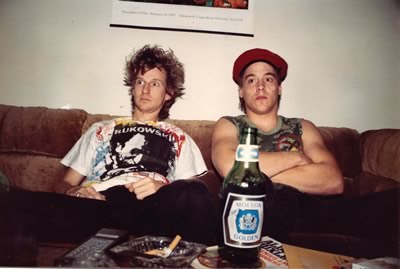
Shut Up Little Man is a comedic documentary and pop culture phenomenon formed around the art of eavesdropping. It tells the story of how two college graduates, Eddie Lee Sausage and Mitchell D., stumble across conversations equating to comedic gold. Eddie and Mitchell moved to San Francisco in 1987, signing an apartment lease on a complex they like to refer to as the “Pepto Bismol Palace.” Late in the evening, lying in bed, Eddie began hearing loud yelling and arguing, "Shut up Little Man!" He awoke the following morning, finding that Mitchell hadn’t heard anything. After weeks of reoccurrence, he finally wakes Mitchell up in the middle of the night to have him listen to the maddening domestic disputes next door. It was the ramblings of their two drunken neighbors, Raymond Huffman and Peter J. Haskett. The irony was that Raymond was a loud-mouthed alcoholic homophobe living with Peter, a “Queen Bee” argumentative homosexual.
The crude use of language and threatening verbal abuse of these two old men made their monotonous arguments pure entertainment for the ears of these wide eyed twenty-something males. They began inviting friends over and hosting parties centered around listening to their neighbors bicker. It wasn’t until a few weeks later, when Eddie realized that the arguing was interfering with his need for sleep, and something had to be said. After all, it was clear the lifestyles of Raymond and Peter consisted of nothing but alcoholism and fighting. In fact, Peter was only once spotted outside of the apartment complex. So one night after being kept awake for hours, Eddie stormed next door to bring the 4am ramblings to a halt. After continually kicking the door, Raymond answers cigarette in hand. Eddie explains to him that the arguing is loud and keeping him awake, however Raymond doesn’t seem to care. He basically threatens Eddie and says that he could kill him if he wanted to (similar to the empty threats he yells at his roommate Peter), so he will do as he pleases. Eddie sheepishly returns to his apartment, knowingly unable to win the fight.
At that point, not only due to the entertainment that these arguments provided but also for evidence if anything was to happen, Eddie and Mitchell began to audio record confrontations of Raymond and Peter. They had a ski pole with a microphone attached that they would stick out their window toward Raymond and Peter’s apartment. They collected over ten hours of material that they put onto various audiotapes. It became an obsession.
The story that follows (which is what most of the film focused on) was the disbursement and pop culture phenomenon that snowballed from these recordings and the moral and ethical questions that they raised. The audiotapes circulated amongst friends and caught on like wildfire. Soon major publications, entertainment companies, comedic cartoonists, and playwrights wanted to get their hands on the material. In 1992 through Bananafish magazine, Eddie and Mitchell commercially released the audiotapes. The documentary not only includes the story behind the tapes, but also the story after the tapes release. Eddie and Mitchell recall the fight for copyrights, movie deals, and the quest to dig deeper into the lives of Raymond and Peter.
I thought that the documentary was informative, hilarious, and slightly maniacal. The storyline of the acquisition of the tapes was not only interesting but also somewhat sad at the same time. The lives that these two men (Raymond and Peter) led, was bitterly humorous. It reminded me of watching someone slip and fall on ice. Are we allowed to take pleasure in someone else’s pain? The ethical question that was brought on by the means of obtaining the tapes was even more intriguing. Were they allowed to record and distribute private conversations? And at what point, if any, were these conversations not considered private? Taking a course on film production, I also thought that the film itself was aesthetically pleasing. The interesting transitions, short snippets of interviews and audio material, mixed with humorous before and after photographs, made the film not only interesting but also fun to watch.
My only criticism is that I felt it lasted a little bit too long. It ran about ninety minutes and I felt they held the audience’s attention for about seventy of those ninety minutes. As the end approached, it began to feel a bit repetitive. With that being said, I thought it was an excellent and fun film. It was relatable on some level, humorous and heartbreaking on others. It deserved the hype, packing the Bartell Theater to brim. Looking around the theater prior to the screening, there were barely any seats left open. The host declared the showing to be sold out, and for good reason. It had the attention and laughter of a full audience. Shut Up Little Man, although not intended for young audiences, is a glimpse into the comedy of roommates that no one would have otherwise been exposed to. Which leads me to wonder, what other funny things in the world are we missing out on?