



John DeMain led the Madison Symphony into a weekend of programs with a promising mix: A fairly new arrangement of rather new music by a local favorite; a standard, but challenging and enjoyable late Romantic work; and, as in the season opener last month, a highly anticipated young soloist returning to Madison even as her international accolades pile up molto vivace.
In programming John Harbison’s “The Great Gatsby Suite” the Madison Symphony became only the third orchestra to perform the 2008 piece based on the 1999 opera. DeMain commented before leading the work that he had been at the world premiere of the opera, and immediately hoped for some kind of orchestral version. It was David Zinman who commissioned the work for the Aspen Festival, where it was premiered in 2008. DeMain brought Harbison onstage, which was a nice addition to J. Michael Allsen’s ever-salient program notes. Harbison, well known for heading up the Token Creek Chamber Music Festival with his wife, Rose, on the family farm just north of Madison, admitted that, “It is a pleasure to hear the music so close to where so much of it was composed.”
In two sections, the 25-minute piece eschews the overture and any arias or other sung material, and comprises nearly one-sixth of the opera. Based on the great F. Scott Fitzgerald novel, Harbison incorporated an onstage jazz band typical of the 1920s and inserted them into the orchestra for the Suite. Opening with a “Roaring '20s” energy that is quickly undermined by an uneasy tension, the work proves a real workout for every section, and the MSO responded with relish and gusto. The Suite follows the general emotional arc of the story, with the second movement falling prey to a dark mood swing more quickly, and ends in a disquieting discord, reflecting the lonely funeral of Gatsby. In the course of the reading, the MSO revealed a consistently pleasing top-to-bottom blend, never shrill in the upper strings or woodwinds, never muddy or indistinct in the bass ranges.
DeMain followed this new tone painting with one of the landmarks of musical landscaping, Richard Strauss’ “Till Eulenspiegel’s Merry Pranks.” While the MSO is of course not the third orchestra to tackle this piece (more like the three-thousandth!), it is music that still tests the mettle of any ensemble, and always delivers some unique pleasures. Every section, from the famous opening horn solo to myriad woodwind and brass licks, provided multiple opportunities to strut their stuff and there was scarcely the slightest muff to be found anywhere. Even auditioning concertmaster Isabella Lippi, in her first of two in-concert auditions for the permanent post, had a couple of well known solo passages and tossed them off with confidence. DeMain did his part in pacing and stirring the kaleidoscopic instrumental turns, all forces combining for a powerfully punctuated conclusion.
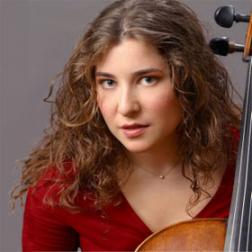
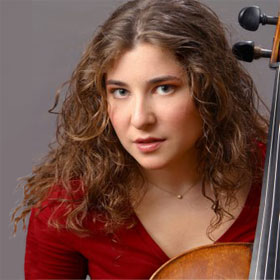
And yet this orchestra-as-virtuoso first half was almost mere prelude for the greatly anticipated return of cellist Alisa Weilerstein. Having previously appeared in recital at Union Theater and as soloist with Andrew Sewell and the Wisconsin Chamber Orchestra (Sewell had first worked with her when he helmed the Wichita Symphony), Weilerstein now returns with press accolades no less celebratory than “the heir apparent to Yo-Yo Ma.”
This time Weilerstein’s vehicle was none other than the cello concerto generally regarded as the greatest of them all; Dvorak’s. Given her recent DVD of the Elgar Cello Concerto, recorded live at Oxford University just this past May 1 with Daniel Barenboim and the Berlin Philharmonic (and reviewed, albeit briefly, on this site a couple of weeks ago), I was prepared to hear her “version” of the “perfect” performance that would compare to Ma (whom I heard in such a performance in Los Angeles nearly twenty years ago).
What I heard was far different — and far better.
In the first place, we all too often fall into the trap of “definitive” performances, and the greater the music, the less sense that perspective makes. Technique and beauty of tone are one thing, but interpretation has to do with re-creating a masterpiece that has life and breath of its own.
And so Weilerstein pushed, almost rushed through some passages in the first movement (early on almost seeming to dare DeMain and the orchestra to keep up with her). She took every opportunity to play soft passages as soft as possible, almost like a high-wire act without a net, and in so doing reminded us of her abiding passion for chamber music. In the end, the “wow” of Weilerstein Friday night wasn’t that she gave some sort of ultimate performance of the Dvorak Cello Concerto, but rather that she revealed herself to be an artist of almost indescribable gifts who isn’t afraid to take the greatest concerto written for her instrument and do a “now” thing with it. Anyone can take a familiar masterpiece and throw in some wrinkles of phrasing, and act as if they’ve done something original by avoiding the safety of a middle of the road approach. But few dare — and fewer succeed — in re-imagining and breathing new life into such a piece, and transcending the argument about whether it is “right,” because they have made it truly alive and personal.
After that incredible refreshment of a first movement, and before starting the sublime “Adagio,” DeMain mopped his brow while Weilerstein looked serenely and contentedly composed. Here and in the finale, whole stretches emerged chamber-like, with Weilerstein willing the sound of her cello backwards, as it were, to the clarinets, flute, horn, etc. Near the end of the work comes a magical mini-duet between cellist and concertmaster, and here Weilerstein looked just four feet to her right to Lippi, and her entire body and musical language seemed to say “soar with me,” and Lippi did.
Rarely are standing ovations as richly deserved as the one delivered by the Overture Hall audience following the final chords. After a number of solo bows for various orchestral members and two or three curtain calls, Weilerstein returned without DeMain, re-seated herself and without announcement launched into a movement from one of the Bach Cello Suites. It might have been from No. 3, but it doesn’t matter: you’re not likely to find a recording to match it or even one that could really remind you of what Weilerstein created in about three marvelous minutes of unaccompanied artistry. She probably could have played C-major scales for the same length of time and still had us on the edge of our seats.
Madison is incredibly fortunate to have experienced Weilerstein’s artistry three times already; before long the entire world will want her, and she may get no closer to us than Chicago. So go grab her DVD, and pop it in whenever you need a dose of awe in your life. It will probably do the trick every time. The only problem is that the DVD — as great as it is — will be the same every time, and I suspect that predictability is not something for which Alisa Weilerstein will be known.