It isn't every day I can use a touring artist as an excuse to tell you about a good book. On March 20, U.K. singer-songwriter Scout Niblett will take the stage at the Frequency, but that isn't the only place you can see her. Obviously you could head to one of our very fine local music stores that carry her many albums, but you could also head to Capitol City or Westfield Comics and pick up a copy of the graphic novel Phonogram: Rue Britannia. The graphic novel is essentially the perfect marriage of music and comic fandom. Comic Book Resources editor Andy Khouri explained it best when the series first rocked the comic book Universe in 2007:
"Phonogram: Rue Britannia" is a dark urban fantasy by Kieron Gillen and Jamie McKelvie about music, magic, memory, love, sex, life, death and the importance of having friends who can drive. It was created to mean something to people, and while "Phonogram" meant something very offensive or terrifying (or both) to at least one Londoner, to an overwhelming majority of critics, comics professionals and fans, the book has meant a great deal more. The Eagle-nominated Gillen and McKelvie have received high marks in virtually every comics review source of note, not to mention positive write-ups on Spin.com and in England's influential Plan B magazine. Celebrated comics author Mike Carey described "Phonogram" as "a comic that kisses you passionately on the frontal lobe, then gets you drunk and rolls you for your stash."
The debut six-issue miniseries "Rue Britannia" is collected this month in trade paperback by Image Comics, and CBR News spoke with Gillen and McKelvie about the book that Warren Ellis praised as "one of the few truly essential comics of 2006."
"Phonogram" takes the romantic idea that music is magic and makes it real. Quite literally, in the world of "Phonogram," a song can save your life - or end it.
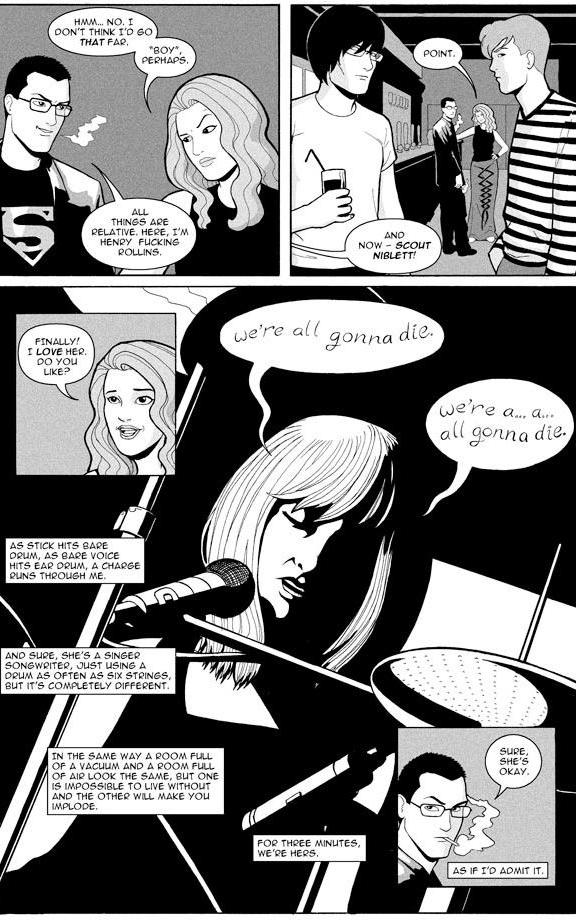
How does the eclectic Scout Niblett fit into the story? She pretty much kicks it off by showing us that we have entered a world of more than just music snobbery, but also magic. As we are introduced to David Kohl he is attending a "Lady Fest" in Bristol for three reasons: to tap into magical energies, to meet a friend, and "to get laid." Kohl is bored with most of the roster of female singer-songwriters until Scoutt Niblett comes on stage and launches into the drum heavy anthem "Your Beat Kicks Back Like the Devil." While engaging a lady in conversation, Niblett's performance slowly sinks in and Kohl has been tricked into going to the club by another phonomancer whose heart he broke. As it sinks in he tries to flee through a bathroom window, but is confronted by Niblett who has become the aspect of the Goddess.
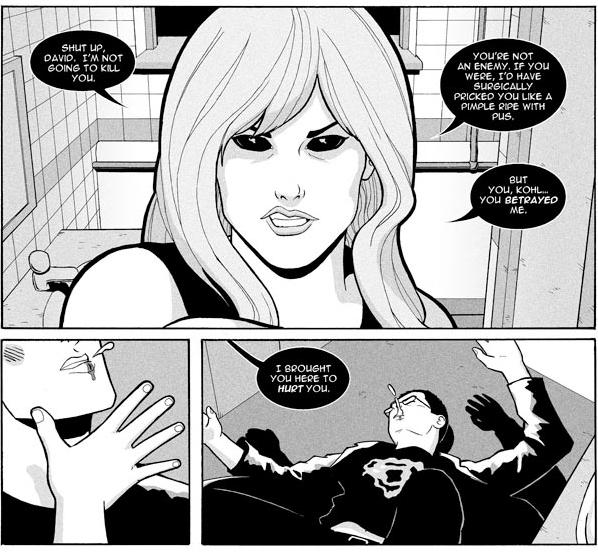
The Goddess, in the form of Scout Niblett, proceeds to throw Kohl around the bathroom like a rag doll while laying out his misdeeds against women and his abuse of magic (something anyone who has made a mix tape for the sole purpose of winning a heart can relate to). Storyline aside, some of the most enjoyable moments in the series are occasionally picking up a reference to a band via a lyric or image. In this universe lyrics have power and early on the Goddess seems to be further incensed when Kohl quotes from the Afghan Whigs song "What Jail is Like," even following up on references to bands you may have never been exposed to.
Unfortunately, being the darling of critics isn't always enough. Phonogram's creators Kieron Gillen and Jamie McKelvie recently announced that, due to low sales, they'll be closing the book on the world of phonomancers after the Rue Britannia follow-up, The Singles Club, is published as a collection later this year.
In the meantime, make it a Scout Niblett weekend. After you check her out at the Frequency tomorrow night head to one of the local comic book stores above and spend Sunday learning about the power of music.
Scout Niblett performs March 20 at The Frequency with The Catalog Babies and El-Tin Fun. Doors open at 9:30 p.m. and admission is $8.