



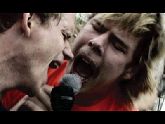
 View originalThere is a sense of loss when exiting Kill Your Idols, the documentary of New York City’s No Wave scene. Even the morning after it is still difficult to decide if that sense of loss should be attributed to sitting through the second half of the film, skipping the Gossip show cross town or the message that it seems Scott Crary was trying to make with the movie – nostalgia is boring and everyone should take there ennui out on the Strokes.
The opening of the movie is promising as the documentary interviews the cast of the 70s No Wave movement shedding light on an often brushed under the carpet chapter in New York City’s music history. Countless documentaries have given weight to bands like the Ramones and the Misfits for carving out the city’s distinct punk scene and the Talking Heads and Patti Smith for spawning New Wave. Rarely does the influential No Wave movement, which rejected the notion that music had to be built on influences and nostalgia, receive much more than a passing reference.
The interviews with Lydia Lunch, Arto Lindsay, Glen Branca and other “founders” of the movement are enlightening. They all ended up in the same place attempting the same thing at the same time – creating music that had little in common except the idea that it was building something out of nothing.
Lindsay says of his band DNA, “I wanted to make it as stop-and-start, spare, with as much silence as possible.”
Suicide’s Martin Rev explains, “We were just trying to be monsters.”
The No Wave music in the late 70s led to bands like Sonic Youth and the Swans in the early 80s. Much like their predecessors who rejected the notion of punk bands influenced by the discordant blues rock bands of the past, the new bands were born of that punk rock, but found their way to the independence of the No Wave movement out of boredom with a tired scene. Thurston Moore and Lee Ranaldo of Sonic Youth and Michael Gira of Swans talk about how different it was back then for a fringe act in New York City. Exposure meant a mention in a black and white photocopied ‘zine, not a full page write up in Spin or Rolling Stone.
On that note, that film fast forwards to 2002 – because we are to believe that nothing happened in New York City for two decades until the Yeah, Yeah, Yeah’s, the Liars, the Black Dice, A.R.E. Weapons and Gogol Bordello pioneered a new movement.
This is where the documentary amusingly falls flat and it feels as if Crary loses his mission. Crary went into the film trying to connect Suicide to Sonic Youth to the Yeah, Yeah, Yeah’s and trying to keep the backdrop in New York City. What he misses is an expansion on the story of Swans founder, Gira, who came to New York from LA because he was bored with the sound in his city and could only find something new in NYC. Today he wouldn’t have to do that, because the success of the “No Wave” movement can be measured by looking outward from New York City.
While the Black Dice certainly do fit the bill - bands like Mogwai, Tortoise, the Lowdown, Deerhoof, and Dillinger Escape Plan make a clearer line to early Sonic Youth and No Wave then the Liars and Yeah, Yeah, Yeahs. Even electronica artists like Otto Von Schirach and Kid 606 can be slotted in for a similar rejection to the clear lines and influences within their genre.
For Crary to simply revolve the world of music around a hipster scene in New York is to miss out on the truly exciting things happening in music right now. Sure there is an undercurrent expressed by the fathers of No Wave in this movie that suggests the filmmaker knows the 2002 New York City music scene was trite and built on image and fashion. But by not looking out there is a failure to acknowledge that there is music happening right now that is interesting, unique and not prepackaged for an Interscope record deal.