



This week in science history:
Feb. 6, 1971: Astronaut Alan Shepard played the first game of golf on the Moon.
Feb. 9, 1996: The element copernicium, originally called ununbium (for its 112 protons), was first created by German scientists.
Feb. 13, 1990: Voyager I sent back its last photographs: a series of images of Solar System objects that would later be combined into one famous image called the Family Portrait. These images would also be the source of the famous “Pale Blue Dot” image of Earth.
News:
*UW: Finding challenges accepted view of MS: Unexpectedly, damaged nerve fibers survive.
*WSJ: Contemplating a world without birdsong.
*UW: Response and recovery in brain may predict mental well-being.
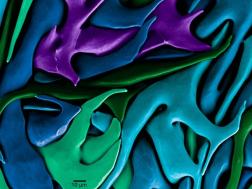
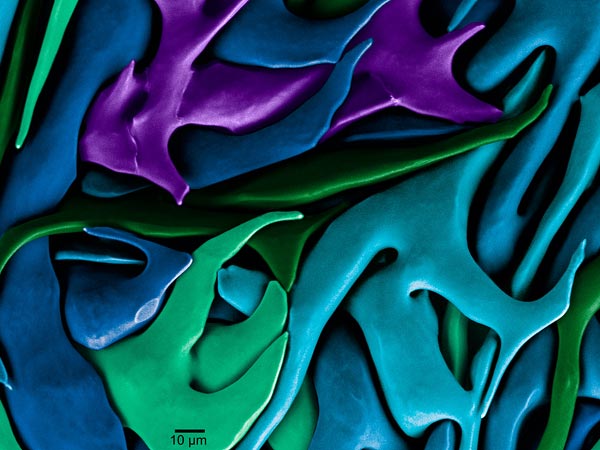
*UW: UW-Madison physicist wins image competition with close-up of sea urchin teeth (pictured above).
*BH: UW researcher fakes data, confesses.
Events:
Ongoing until April 1: Fallout: The mixed blessing of radiation and the public health. Historical exhibit documenting the early uses and misuses of radiation and its evolution to bombs, power generation, and biomedical devices. Ebling Library, 3rd Floor Gallery. Free!
Tonight:
Wednesday Nite at the Lab: Volume six of the Dictionary of American Regional English. 7 - 8:15 p.m., Auditorium, 425 Henry Mall. Free!
Wednesday, Feb. 13
Wednesday Nite at the Lab: Is there sex after 60? 7 - 8:15 p.m., Auditorium, 425 Henry Mall. Free!
To submit your science-related event, e-mail science@dane101.com