



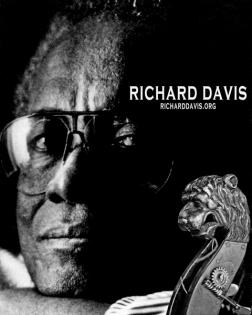
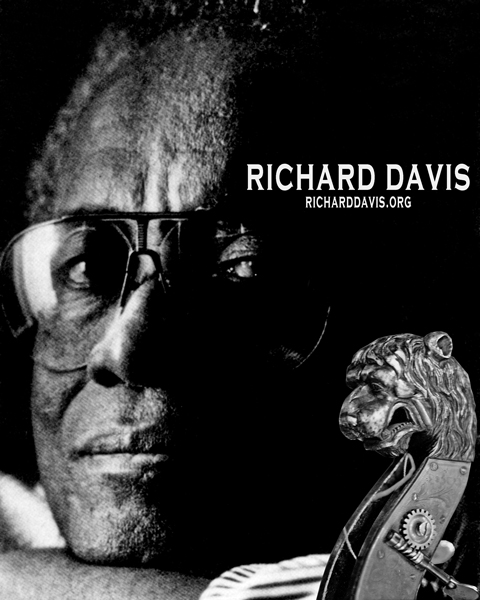
"I never wanted to be black. I wanted to be white, because I never saw any white people swinging from trees," said Richard Davis, Professor of Bass at the University of Madison School of Music, and President of Madison Wisconsin Institute for the Healing of Racism.
Davis, whose family came to the Northern United States during the great migration at the turn of the century, said it is common for people of minority races to feel compelled to excel, in order to be treated even close to fairly.
"My mother told me I had to get the best grades because of my skin color," he said. "One time I brought home a test with a 96 on it and she said, real calmly, what happened to the 100? I made the mistake of saying the next person got a 93 and bragged about my 96. Next thing I knew I was picking myself up off the floor. You get the message," he said.
Because racism is still so prevalent, the Institute, whose mission is to to raise consciousness about the history and pathology of racism and help heal racism in individuals, communities and institutions, runs classes several times a year in Madison that are open to the public for a low fee of $20 for 10 weeks of 2 hours sessions.
“I only hope that I can somehow change who I am in my remaining lifetime and pass on to my children what little I now know so they do not have to wait 46 years to finally learn the meaning of racism,” said former student University of Wisconsin Police Captain Dale G. Burke.
Davis first became aware of this work when a friend called him to tell him to tune into a radio show featuring Nathan Rutstein, co-author of Healing Racism in America: A Prescription for the Disease. "I think you would like him," the friend said "because he sounds like you." So he did and while listening, said to himself "Wow, I've been waiting to hear someone talk that way!" Davis traveled to Michigan to see Rutstein speak in person.
"I was so impressed by him," he says "what a manner, such a gentle nature, and kind eyes. I thought - this guy has character!" So he called him up and asked him if he would be willing to travel to Madison to deliver a lecture at the university, and he agreed. Davis spent the next seven years training with him and now trains facilitators himself.
One tenant of this work, Davis puts forth, is that "In efforts to deal with that pervasive disease racism, human relations practitioners have become increasingly convinced that the American form of the disease is most effectively treated as a white problem that severely damages its white victims, as well as those against whom it is directed," as written in White Awareness by Judy Katz. "More, since white racism is a white problem, it is the business of white people to resolve it. We must not," says the author, "place the burden of changing white attitudes and behavior upon the members of minority races. It is not their responsibility to tell us how to change. It is ours," she writes.
And people are changed in profound ways by attending these courses. Some students come back to the class again and again. Some eventually become facilitators themselves. Others take the work back out into the world and into their lives. Davis said he had a couple of students who learned how to listen in class, then took this new skill home with them and used it to fix their marriage. He also said that learning to listen was a breakthrough for himself that has made him a better person. "[Rutstein] taught me that if you listen hard enough, with your intention, you can hear things that are not even being said," he comments. "One time I was listening to this woman, and even though I did not offer up even one solution, she said I gave her the answer, because she came up with it just by talking it out."
Reading material assigned in the classes include White Like Me by Tim Wise, a prominent anti-racist writer and educator who will be coming to speak at Beloit college next week. He has been called, “One of the most brilliant, articulate and courageous critics of white privilege in the nation,” by best-selling author and professor Michael Eric Dyson, of Georgetown University. His new book Dear White America: Letter to a New Minority challenges the assumption that white Americans still set the cultural norm and discusses what it means to be part of a fast-changing, truly multicultural nation.
Wise is speaking on issues of race in America at Beloit College in October 10.
For more on Richard Davis: http://www.richarddavis.org
For more on Tim Wise: http://www.timwise.org
[b]Tim Wise, Speaking on Issues of Race in America[/b]
[b]Wednesday, October 10th, 8pm, FREE[/b]
[b]Eaton Chapel, Beloit College[/b]