



Over the next month dane101 will be interviewing the entire field of District 2 candidates to introduce our readers to the individuals seeking the open seat. We'll be posting one profile each Tuesday.
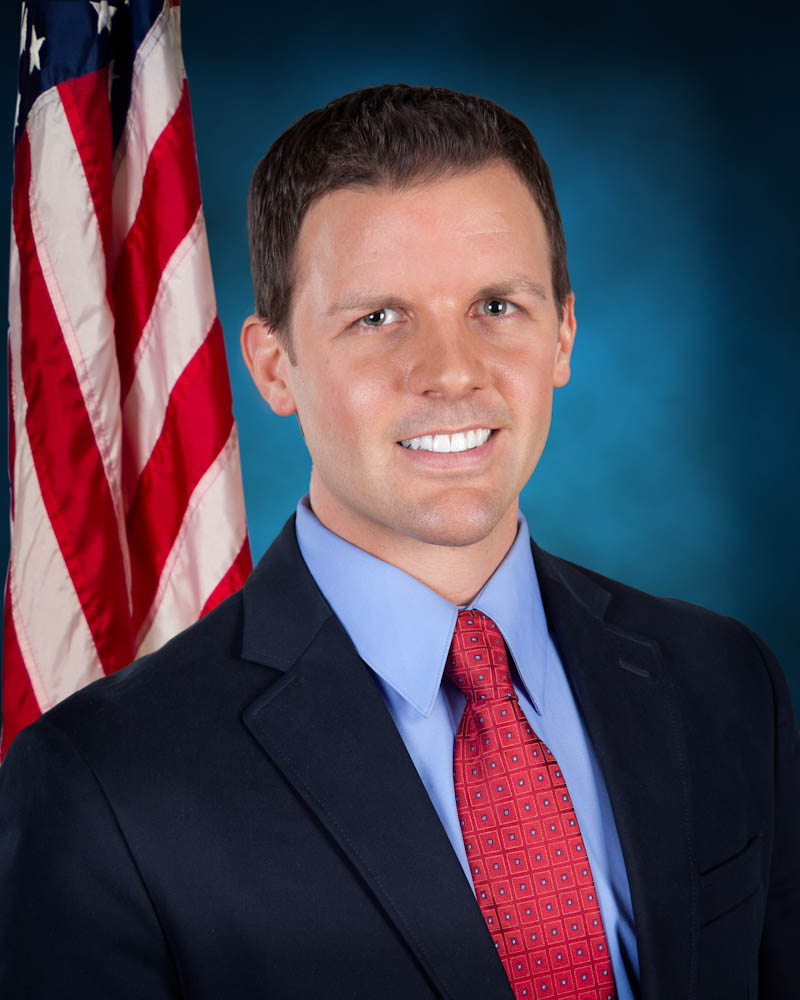
Mount Horeb businessman Chad Lee is the only Republican currently vying for U.S. Rep. Tammy Baldwin’s open seat. He’s also not new to running in District 2—he ran two years ago, with the best fundraising numbers of any of Baldwin’s challengers, but still lost by 80,000 votes.
Lee, 29, sold his housekeeping business in 2010, and is now in the process of building another, a research technology company based on harnessing the cloud.
His motives for running a second time echo those of other Republicans currently on the campaign trail: he sees freedoms “slipping away,” and a dearth of job creation.
“I really wasn’t looking to run again,” he says. “But what’s the point of me continuing to build this business if the government is going to continue to stifle this growth, if I have nothing left to pass on to my grandkids?”
He echoes the sentiments of many of the Republican presidential candidates, too, when he says, “2012 is, I think, the most important election cycle of our lives.”
The main source of his unhappiness is the Patient Protection and Affordable Care Act, portions of which were recently challenged before the U.S. Supreme Court.
He says he’s talked to business owners--specifically restaurant owners--who have had difficulty with the costs of making the changes required by the act. And he says he thinks those expenses will stifle the country’s economic recovery. “I want to make sure the regulations the federal government does pass is responsible and not unnecessary,” he says.
In the same vein, he thinks the Dodd-Frank Act, which added new consumer protections and bank regulations in the wake of the 2008 financial crisis, is another example of “well intentions run amok.” The real cause of the crisis, he says, was “social engineering to get everyone into houses, whether they can afford it or not,” and he thinks that Dodd-Frank only adds costs to businesses, that it creates complex rules, and furthers a compliance-driven mentality. “It escalates the narrative that regulation will fix the problem,” he says. “There is a place for sensible regulation, but when it doesn’t work and we try to fix the problem with more of the same solution, we create loopholes and end up worse than where we started.”
As for creating jobs, another priority, he says “certainty” of regulation will be an important step forward. “We need something that’s not going to change down the road,” he says, using as an example the temporary nature of the payroll tax cut extension.
“If you’re going to give a tax cut, give it for a couple years at least, so I know my cost of business isn’t going to skyrocket,” he says. “All job creators see is more taxes, more spending, higher deficits. That’s not a recipe for success.”
When I ask him about the idea of a Republican “war on women,” the recent drop in female voters' support for the party, and whether it’s an issue for his campaign, he points to the controversy over remarks by CNN analyst Hilary Rosen, and says it might be hard to tell from where, exactly, that war is being waged. And he doesn’t name his positions on contraception access, funding for Planned Parenthood, or abortion, saying that those issues shouldn’t be legislated at the federal level anyway. “The 10th amendment clearly reserves those powers to the states,” he said. When I ask him how women can benefit from his election to the House, he says improvement to the general economy will help women too. “Women have been disproportionately affected by the administration’s mishandling of the economy,” he said. “Women and all Americans will benefit by sending me to Congress to fight for real job growth.”
Lee says the national debt is another concern, and the lack of a new federal budget to address it.
“We’ve been building up and building up for decades as far as national debt goes. We want to get more people in wash who know how to balance a budget--if we don’t, we’ll follow in Greece’s footsteps.” To continue spending money, he says, just puts the burden on future generations.
As such, he says, one of his first priorities is helping find a budget that can pass, that is bipartisan.
On Paul Ryan’s budget outline, which would turn Medicare into a system with fixed payments to beneficiaries to cover the costs of private insurance, Lee says he’s impressed “by the comprehensive manner it addresses our spending issues.” Tough decisions are necessary to fix the budget, he says, and the Ryan plan addresses that need. “The problem is we’ve kicked the can down the road too long,” he says.
As for what’s been holding up the budget so far, he says he thinks it’s sheer divisiveness. “We’ve become such a partisan nation that even if a couple people on one side agree with the other side, they’re not willing to work with each other,” he says. To blame, he says, are career politicians, fixated on reelection, “who have forgotten how to work with people with different backgrounds and different opinions.” As a business owner, he says, he’s had to work with everyone involved in the business, and knows how to compromise. “You have to come up with solutions, and figure out what we can do that’s agreeable to both sides,” he says. So will he be the minority who breaks off to vote with Democrats? I ask. “If I think it’s right for America, I will vote for it,” he says. “I don’t need to be a lifelong politician. I can be there for just one term.”
His thoughts on how, specifically, to create a workable budget, are that, first of all, there should be no new taxes. And without new taxes, he doesn’t think social programs like Medicare can survive unless there’s some reform. “People are living a lot longer. People are on Social Security a lot longer,” he says. Later eligibility and, “possibly partial privatization,” he says, are ideas he wants to explore. “Maybe people want to work, they want to be productive,” he says. “A lot of young people are starting to plan for entitlements not to be there when they retire unless we do something about it.”
Fundraising numbers for the first quarter of 2012 were not yet complete when I spoke with Lee, and are not yet current at the Federal Election Commission website. But Lee, who raised about $130,000 to Baldwin’s $1 million in the 2010 race, said he was on track to do better than last time around. “The support, the energy, even the people getting involved early on, is just tremendous,” he says. “I wouldn’t be running if I didn’t think I could win.”
He also thinks the outcome of the gubernatorial and state senate recalls won’t change his chances, though they’re definitely distracting from the fall races. “Whether the governor wins or loses the recall election in June, the important issues facing Congress, such as our country’s crippling debt and the need for a real, comprehensive energy policy will drive this race,” he says. “By the time November comes around, we’re confident voters will be ready to focus on our race, and how we need to send a message to Congress.”
Finally, I ask him what he thinks might make him a good choice for Congress, and he says it comes down, ultimately, to integrity and honesty. “Those are characteristics that any person who’s representing a group of people should have,” he says. “A lot of politicians have lost track of what honesty and integrity is. That’s how I run my business, my life, and how I’ll run my office in Washington.”