



A piece of legislation introduced last week in both the state Senate and Assembly that would significantly ease regulations on mining companies seeking permits in Wisconsin is coming in for severe criticism from politicians and the public.
AB421/SB326 represent legislation that would force the Department of Natural Resources to make permit decisions within a year, and severely limit the amount of public input in regards to those decisions. The legislation was designed to fast-track an open pit iron ore mine proposed by Gogebic Taconite in the Penokee Hills range, just south of Lake Superior.
“There is no clear problem that this bill solves,” said Rep. Brett Hulsey (D-Madison) during a hearing of the Committee on Natural Resources at the Capitol on Wednesday. Hulsey questioned why the legislation was being discussed at the same time a public hearing on the matter was being held in West Allis.
Rep. Kelda Helen Roys (D-Madison) wondered the same thing in a press release issued Wednesday, noting, “Just five days after unveiling a complex, 183-page bill, Assembly Republicans are holding the public hearing 350 miles - over a six-hour drive - from where a West Virginia company intends to locate its giant strip-mine.”
Roys, who is currently running for the U.S. Congress seat being vacated by Rep. Tammy Baldwin, on Monday filed an open records request for “all documents and communications, including electronic documents and phone records, between Gov. Walker and staff with any official or representative of Gogebic Taconite, or relating to mining.”
There has been much discussion of how the legislation was authored. At the bill’s first public hearing Wednesday at State Fair Park in West Allis, Rep. Sandy Pasch (D-Whitefish Bay) asked bluntly, "Who wrote this bill?" Republican legislators countered that it wasn’t “unusual” for a bill to be introduced without naming its authors.
Many have criticized the drafting process for being done in close cooperation with lawyers from Gogebic Taconite, and for excluding entirely Democratic members of the Legislature.
If enacted, the new bill would supersede the rule-making authority of the DNR when it comes to permitting and regulation of mines. It also removes the requirement that an applicant submit a notice of intent prior to the release of their Environmental Impact Statement, eliminating public hearings. Also no longer required would be a risk assessment of accidental health and environmental hazards, or a demonstration that runoff from the mining site will be managed so as to prevent soil erosion “to the extent practicable, flooding, damage to agricultural land or livestock, damage to wild animals, pollution of ground or surface waters, damage to public health, and threats to public safety.”
The new bill also gets rid of the right of citizens to file suit related to metallic mining decisions with the DNR.
At a press conference unveiling the new bill last Thursday Assembly Speaker Rep. Jeff Fitzgerald (R-Horicon) abruptly ended the question and answer session when pressed about that particular provision.
The first phase of Gogebic Taconite’s proposal “calls for mining a 4 1/2-mile stretch of the range just south of the Bad River Band of Lake Superior Chippewa's reservation. The company claims that first phase would last 35 years, generate about $1.4 billion in state and local tax revenue and create 700 jobs for people in the area and help drive the creation of 2,000 or so more jobs in the region's service and transportation sectors.”
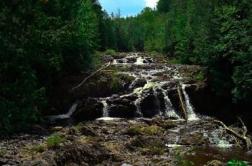
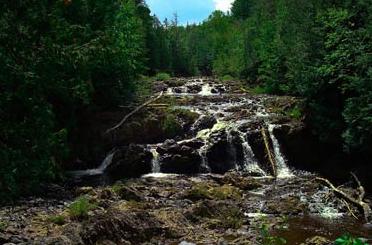
The Penokee Range of Ashland and Iron counties, where the mine would be located, contains areas of pristine wetlands, forests, and other natural resources that support not only tourism, but also provide drinking water, managed hardwood timber production, and more: “The proposed mining area embodies a large portion of the headwaters of the Bad River watershed, which supports the 16,000-acre Kakagon-Bad River Sloughs, the largest undeveloped wetland complex in the upper Great Lakes.”
In a release questioning the hurried progress of the legislation, Mike Wiggins, Jr., Chairman of the Bad River Band of Lake Superior Tribe of Chippewa Indians, suggested that “there is no credible evidence from independent sources showing that mining will lead to sustainable jobs and economic development in Wisconsin.”
Wiggins goes on to claim that evidence in Wisconsin and around the world supports only a “boom and bust” cycle for local economies built around mining, as well as serious environmental and health problems for inhabitants.
In Ladysmith, where the Flambeau sulfide mine operated for four years in the 1990s, the unemployment rate currently sits at 13.1 percent—a full 4 percent higher than the national average. The town has also lost 13.2 percent of its population since 2000. Per capita income in the town is just $19,501.
The company that operated the mine also faces a lawsuit for alleged violations of the federal Clean Water Act: “The Wisconsin Resources Protection Council, the Center for Biological Diversity and Laura Gauger filed a Clean Water Act citizen suit Jan. 18 against Flambeau Mining Company over its partially reclaimed Flambeau Mine near Ladysmith, Wisconsin. According to the suit, the mining company is violating federal law by discharging pollutants, including potentially toxic metals like copper, iron and zinc, into the Flambeau River and a tributary known as Stream C that flows across the company’s property.”
Tests conducted at the Flambeau site in 2010 and 2011 by the DNR have shown levels of copper and zinc that exceed state standards set to protect aquatic life.
The mining bill has plenty of supporters, too. At the hearing in West Allis at least 130 people registered to speak, of which many pleaded with legislators to pass the bill:
One of the first was Shirl LaBarre, who runs a plumbing business with her husband in Hayward. She told the committee people in northern Wisconsin are desperate for work.
“I respect the earth. I respect the water. (But) we've got to have jobs. There's nothing now,” she said. “It's relatively simple. It seems like you guys are making it more difficult.”
John Senda, chairman of the Iron County Republican Party, called Northwestern Wisconsin's economy “dysfunctional.” He said the area is totally reliant on tourism, and those jobs pay next to nothing. He said mining is nothing new in Northwestern Wisconsin and the environment hasn't suffered. Conservationists are resorting to scare tactics, he said.
“We still have trout and they don't glow,” he said.
The Committee on Jobs, Economy and Small Business voted before the hearing 7-5 to have the legislation introduced to the state Assembly. The fight over the final wording of the bill will likely continue to be heated, as economic and environmental interests are weighed and often pitted against one another.
Ann Coakley, who handles mine permit applications for the DNR, noted at the hearing that the current GOP plan would likely run afoul of the federal permitting process, lengthening the time it took to issue a permit even more.