



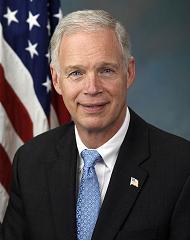
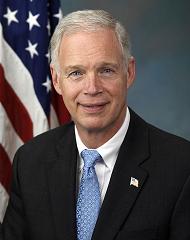
TPM continues to hound Wisconsin Sen. Ron Johnson over a possible violation of corporate underwriting of campaigns. According to Milwaukee Journal Sentinel's Daniel Bice, where this story first appeared, Johnson received $10 million in deferred compensation shortly after leaving his plastics company to represent Wisconsin in the Senate. That number lines up with the $9 million Johnson invested in his campaign. The problem is the company doesn't appear to have had a written agreement regarding his deferred compensation upon leaving the company. Attorneys told TPM "a written agreement is critical, and without one, Johnson could face serious charges that he violated campaign-finance laws barring direct corporate funding of federal candidates."
When Bice asked who agreed with Johnson that the payout was the appropriate amount his answer was, "that would be me."
TPM caught up with Johnson yesterday and asked if the agreement was worked out before or after he started his campaign against Russ Feingold for the Senate seat. When pressed on the timing Johnson walked away.
Johnson is being asked to produce a written deferred compensation form that shows the agreement was reached before his Senate run. If it was reached after he started his election the FEC could charge Johnson as the CEO of Pacur, because law prohibits companies from giving directly to candidates from their treasuries.
TPM also suggests that this isn't the only issue of potential financial impropriety Johnson is facing:
The deferred compensation is only the tip of the iceberg, according to campaign finance experts. A review by TPM of Johnson's 2009 financial-disclosure form, also shows two promissory notes Johnson received from the same plastics company, Pacur LLC, in 2004 and 2007 for $1 to $5 million each with a very low 0.69 percent interest rate -- virtually interest free.
Local Wisconsin bloggers have said the loans were part of an elaborate tax-avoidance plan.
Watchdogs tell TPM the loans could provide an interesting wrinkle in the case because federal candidates are barred from taking out loans at below market-rates as a way to finance any part of their campaign.