



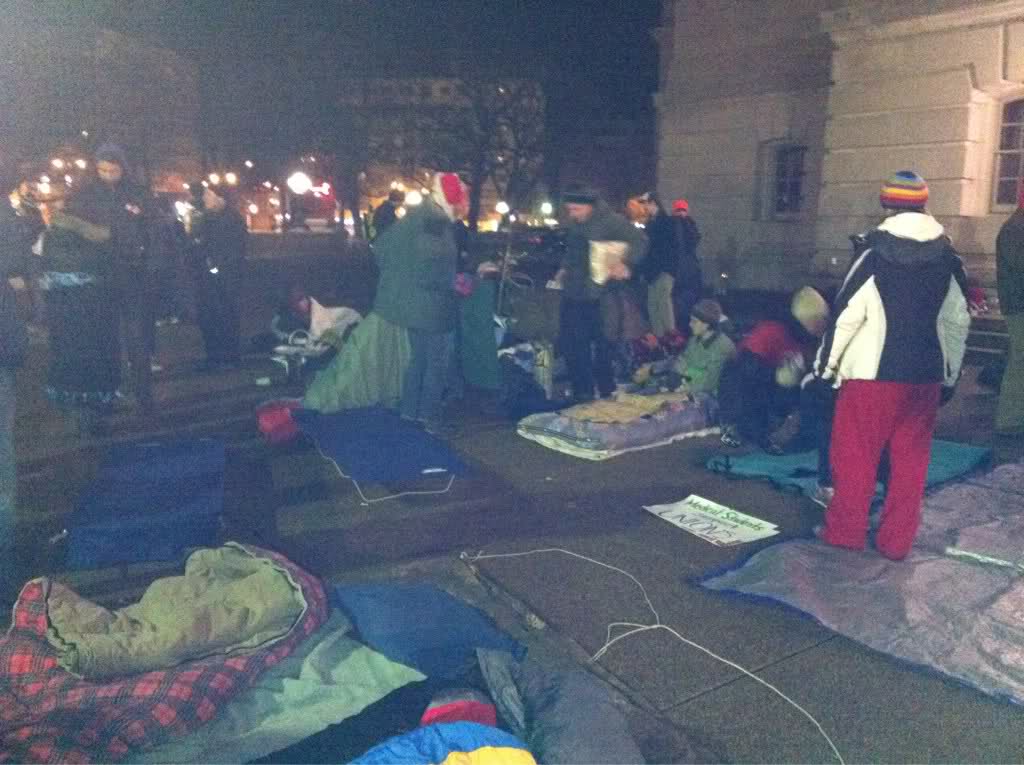
They called it "Walkerville," an homage to the Hoovervilles that sprung up during the Great Depression. Last night, after being locked out of the Capitol building, dozens of dedicated protesters camped out on the grounds outside.
They bundled up in nothing but sleeping bags and donated blankets, regulations forbidding tents from being erected on Capitol grounds. Temperatures overnight were below freezing, but the dedicated group stuck it out until the sun came up.
I solicited the thoughts of two people who joined the slumber party protest, and their stories follow:
Jenni Dye (aka @legaleagle on Twitter): So. Camping outside the Capitol. Not something I ever expected I would take part in, but after I arrived at the Capitol yesterday at 8 a.m. only to be denied entry, I was more motivated than ever to take part in the opposition to the actions of the Walker administration and Republican legislators. I had to leave the Capitol by 8:30 a.m., at which point the doors were, of course, still locked. I then worked until about 6, ran to Target to buy a sleeping bag--which I hadn't previously owned--and piled every blanket I owned into my car.
There were about 50 of us who spent the night. People brought tarps and we received a huge donation of blankets, after I responded with "BLANKETS!" to a large number of tweets asking what people could do. The generosity of the people involved in this protest continues to amaze me. Tarps were put down first, and layered with empty pizza boxes (a constant theme it seems!) to insulate us from the cold ground. Most people set up shop as close together as possible, for body warmth. I was pretty warm and toasty, but wouldn't have been if I hadn't been cozied up next to a good friend, Ed Knutson. It was Ed who coined the term "Walkerville," which I believe will stick thanks to the magic of Twitter and a good old-fashioned pizza box sign.
Throughout the night, leading up to the actual sleeping, they let everyone take the megaphone and speak about why they were still there and what the protest meant to them. A medic stayed the night to watch for signs of frostbite. Local businesses dropped off hot food and hot chocolate (as a side note, my ears are still red and a bit tingly as I type). Sleeping under the stars was probably the most peaceful moment of the protest for me, but also the most defiant. I felt like in that moment was when I really was saying no. We won't simply fade away. We're willing to stick it out.
And we did. This morning I woke up full of hope. The coffee donations flooded in until we were almost literally swimming in coffee. I dashed off to work. I'm told that they let the people who had been sleeping outside into the Capitol first. Then the news of the injunctions came. It's been an uplifting 12 hours!
---------------
Mindy Preston: I was absolutely stunned by the number of people who came out to give us blankets, sleeping bags, sleeping mats, tarps, coats, hats, gloves, hand warmers, space heaters, extension cords, hot tea, hot chocolate, breakfast food, and probably lots of other things that I didn't hear about. We probably had as many people come by and drop off stuff as stayed over, and hundreds more than that call, text, or tweet their support for what we were doing. The folks inside the Capitol even managed to send out a blanket for us, with "SOLIDARITY" written on it in marker.
The Governor's bill is predicated on an assumption of necessary austerity - that there is not enough to go around, that we need to tighten our belts, and that we all have to make sacrifices. Leaving aside the question of whether the most controversial provisions of SSB 11 actually ameliorate budget shortfalls, the outpouring of support over the past two
weeks is a forceful rebuttal to that assumption. There is enough to go around, and more. We don't need to stop giving to one another. We don't need to stop supporting people in poverty. Even if there weren't enough to go around, the answer wouldn't be to take support and resources away from the people who need them most.
(Photo by Jenni Dye)