



I've always been a big proponent of lessening earmark spending. There are certainly a number of projects that the federal government doesn't need to involve itself in, that carry with them excessive spending that have a positive effect for only a limited number of people.
But during times of financial duress, when local governments depend upon those funds to help with the burden of economic difficulty, it's imperative that SOME funds from the federal government go towards special projects that truly do benefit the people.
According to the New York Times, some communities in Wisconsin are getting hit especially hard by the Republican-led ban on pork projects. Because of this moratorium on earmark spending, several counties across the country -- including Burnett County in Wisconsin -- could see their property taxes increase as a result.
Gone for now are the likes of the taxpayer-financed teapot museum, or studies on the mating habits of crabs.
But also shelved are a project to help consolidate information about warrants in Brazos County, Tex., and staffing for two new shelters for abused women and children in Salt Lake City. [b]A rural Wisconsin county will not be able to upgrade its communication system[/b], and a road in Kentucky will not be widened next year.
[b]In Burnett County in Wisconsin, the loss of a $1 million federal earmark to help pay for modernizing its communication system could result in a property tax increase, said the county administrator, Candace Fitzgerald.[/b] (Emphasis added)
It's clear that many pork projects are a waste of time and resources. But in many localities across the country, funding is running out -- and where compliance issues arise, where municipalities are required to be in-line with a state or federal statute, taxes are going to be raised in order to ensure laws are being implemented properly at the local level.
In short, it's the Republican Party's back-door tax hike: by refusing to help local governments through any earmark spending whatsoever, the GOP forces local governments to raise property taxes, hitting middle class Americans once more with the tax burden.
President Obama once saw the merit in limited earmark spending. In 2009, following passage of his stimulus bill (and amid criticism that it was full of pork projects), the president chastised most earmarks as reprehensible, but defended SOME projects as noble. "Done right, earmarks have given legislators the opportunity to direct federal money to worthy projects that benefit people in their districts, and that's why I've opposed their outright elimination," he said at that time.
In his State of the Union Address earlier this year, however, his attitude changed completely, mirroring that of his one-time presidential campaign rival John McCain. "If a bill comes to my desk with earmarks inside, I will veto it," he said.
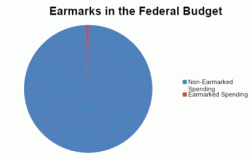
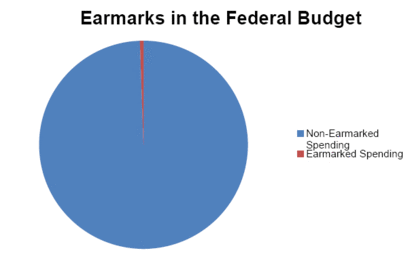
The president's first statement is the right standard to abide by. Earmark moratoriums on their own don't solve the problem -- in fact, in the long-run, they create more problems for local governments while failing to decrease the federal budget in any significant way: earmarks only account for less than one-half of one percent of the entire federal budget.
Putting so much faith in gutting earmarks outright from the budget solves nothing, and puts communities across the country in a very difficult position of having to raise taxes, not out of preference but rather out out necessity. The moratorium ought to be lifted, with new reforms adopted in order to prevent pork-barrel abuse we've seen in previous years. "Good" earmarks should not be prevented, communities diminished, because we don't like SOME pork-barrel projects.