



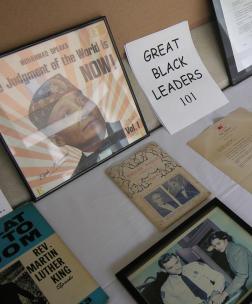
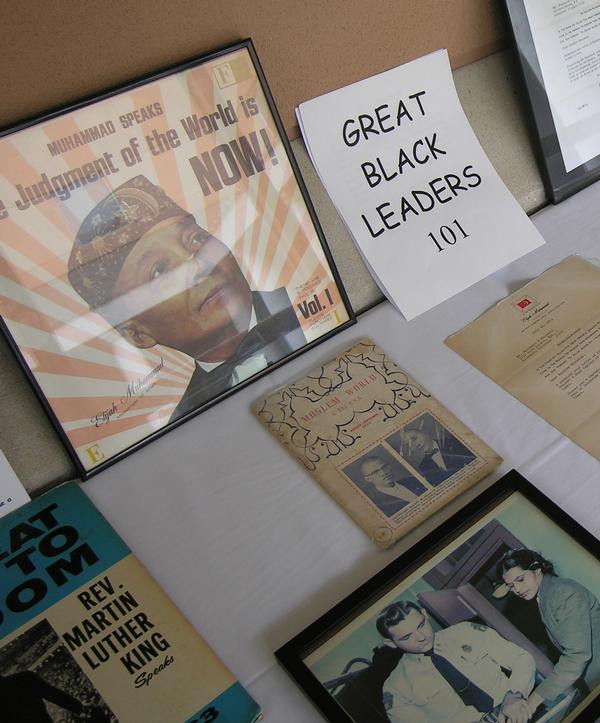
This Sunday, the University of Wisconsin-Madison will host a special showing of the Black History 101 Mobile Museum: Hip Hop 101, a collection of items celebrating modern African American culture and hip hop history. The museum has traveled throughout the country, making stops at universities, museums and community centers, and has been praised for its originality and immediacy to the culture.
The museum features a range of items, from the Jim Crow years of our nation’s history to the funk revolution of Parliament Funkadelic. The museum also details the history of hip hop, including the early Beat Street years to the death of hip hop legends 2Pac and Notorious B.I.G.
Much of the historical lead-up to the era of hip hop that is presented can be seen as encompassed within this cultural revolution, as hip hop itself is a confrontation with the image of being black in America. From the black power movement of Public Enemy and X-Clan to the flash and glam commercial rap, the museum presents all the strengths and contrasts of this dynamic movement.
Founder and curator Khalid El-Hakim has been collecting the items for almost 20 years, using the exhibit to express his passion for educating the public. He has also left a considerable legacy in the hip hop industry as manager for the late rapper Proof, who was best known as a member of D12 and as Eminem’s hype man on tours. El-Hakim is also Vice President of Proof’s record label, Iron Fist Records.
Some items in the museum will come as quite a shock to see in modern times, as many pieces are remnants of when portrayals of African Americans were cartoonish, caricatures from a time when segregation was law and lynchings were not uncommon in the South. In an interview last year with HipHopDX, El-Hakim described the importance of collecting these artifacts for the purposes of developing a proper historical narrative.
"In many cases, people take these items and destroy them - especially the older items,” said El-Hakim in the article. “Either what happens, if the ugly stuff doesn't end up in museums, it ends up in private collections or [destroyed]. I collect it for the purpose of telling the story and sharing it with the public. History is important, because for years we've been told lies, we've been told a history of omission. People leave out parts of history. It's my purpose and mission, as a teacher, to go out and fill in the voids that history has left out."
The Black History 101 Mobile Museum will be at the UW-Madison Memorial Union on Sunday, April 25, from 3 - 6 p.m. For the room information, check online at TITU. For more information on the museum, visit http://www.myspace.com/blackhistory101.