



A recent bill proposed in the Wisconsin Assembly would help eliminate the Electoral College system at the national level.
The proposal, introduced by Rep. Kelda Helen Roys, would mean that the national popular vote would determine the presidency, preventing an election where the candidate with less votes could still win the office. An agreement among several other states would put Wisconsin’s Electoral votes toward the national candidate winner rather than the candidate that wins the state’s votes.
In 2000 President George W. Bush won the Electoral College vote but lost the national popular vote by more than half a million ballots. Two other elections in American history have had similar results, with the popular vote winner losing the Electoral College and thus the presidency.
Nationally, more Americans would prefer getting rid of the Electoral College completely. But many who support the Electoral College have made the case that it ensures that the votes of smaller states count, helping to ensure that the presidential candidates pay closer attention to the less-populous states by campaigning in places they wouldn’t normally travel to.
That’s precisely the problem, however--and it’s a bigger problem for Wisconsin voters than you’d think.
Those who live in Wisconsin probably wouldn’t consider it a heavy-population center. With plenty of farmland and wide-open spaces between urban areas, there’s significant reason to believe that we don’t match up to the “heavyweights” like Texas, New York, or California. Compared to the rest of the nation, however, Wisconsin ranks fairly high. With ten Electoral votes, it “outranks” 30 states total in terms of population, tying three others.
When it comes to the Electoral College and the presidential election, that’s important. When a state has a lower population, it means that each of its Electoral votes represents more people. For instance, a state like Alaska, with a population of around 700,000 people, has three Electoral votes that represent approximately 230,000 people each. In California, with just under 37 million people, their 55 Electoral votes represent approximately 660,000 people each.
In Wisconsin, each of our Electoral votes represents about 560,000 citizens. In each of the thirty states with less Electoral votes than our own, a single person’s vote represents “more” electoral power than it does in the Badger state.
In other words, because of the way the Electoral College was designed, a person in Alaska who votes for president has more than two times the voting power than you do.
The argument that Wisconsin “won’t matter” if we abolish the Electoral College, then, is flawed. In fact, today, with the Electoral College in place, Wisconsin voters matter less than in the 30 states with smaller populations than our own.
We live in a representative democracy, where everyone’s voice is meant to be equal. With the Electoral College in place, however, that equal representation is lost. Voters in one state have significantly stronger voting power than those in another state, for no reason beyond artificial boundaries.
In Wisconsin, our voters are considered less important than the voters in thirty other states. If we want to level the playing field, if we want to make everyone’s vote across the country equal, we need to rid ourselves of the Electoral College once and for all.
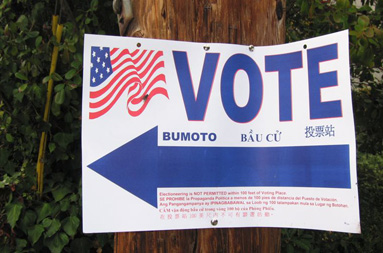
(photo by hjl on Flickr)