



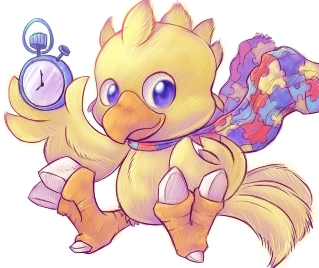
 View originalThe Speed Gamers (TSG), a group based in Texas, has been streaming video game marathons for over a year to raise money for various charities. They have members from around the world and have just completed a week-long marathon playing Final Fantasy games. Their initial goal was to raise $20,000 for ACT Today!, a nonprofit organization whose mission is to provide funding and support families that cannot afford treatments their autistic children need to achieve their full potential.
Well, as of the end of the week, TSG had raised $50,614.63.
This is amazing to me, and great PR for gamers throughout the country. Even as “bad news” is also in the headlines, with the Entertainment Software Association (ESA) suing the Chicago Transit Authority over the banning of advertising for Grant Theft Auto IV on buses and trains – a can of worms that can be opened in a future blog post), TSG’s story helps focus the media on the good that playing video games can do.
And their group is not the only one, as is demonstrated by the website http://gamemarathons.freei.me/. Headquartered in San Francisco CA, it offers news and information about current and past charity video game marathons, and also has a page about how to set up your own marathons, including how to best collect donations. The Hoosiers over at http://mariomarathon.com/ raised $29,000 this month as well for Child’s Play, one of the most prominent game industry charities
Since 2003, Child’s Play, has set up “wish lists” of video games, toys, and movies for children’s hospital around the globe. Started by the people behind Penny Arcade eXpo, over 100,000 gamers worldwide have banded together through Child’s Play to donate over $3.5 million for sick children. In Wisconsin, the Milwaukee Children’s Hospital has a list on the site which includes everything from Xboxes to Pokemon games.
ESA itself has the ESA Foundation, which to date has raised over $7.8 million for charities supporting the health, welfare and quality of life of America's youth. Most gaming conventions have some sort of charity auction or contest, too.
That is not to say video game charities haven’t had their share of skeptics. Pixel Equity, a group that recently launched, promotes itself as a non-profit organization “connecting people who want to share video games with those that want to play them”. One of their first donations was of a Wii to the Youth Action Programs and Homes group in East Harlem.
This group in particular has been the focus of some blog posts, especially from charity writers, on whether or not gaming can be for the greater good. According to Pixel Equity’s website, it focuses on the ability of video games to expose players to other cultures and the scientific method, and to strengthen focus and teamwork. In my opinion, the penetration of technology in all aspects of “real life” adds to the good of donating games and systems to underprivileged kids. I do believe the social skills and interactivity of video games is something that is many times forgotten by those outside of the gaming community. Finally there’s the fact that, whether you like it or not, playing video games helps kids feel normal and mainstream, something that, at certain times, we all want to feel.
Getting back to TSG, however, as far as I’m concerned, if you are planning on playing 168 hours of Final Fantasy, you might as well be making money for a good cause at the same time!
Sarah B’s gaming focus is varied, as she plays games online and in bars, but is also drawn to console games with strong or complicated story lines and great atmosphere. She is a big supporter of the Nintendo Wii and the DS, has had issues with the PS3, but loves PS2, classic consoles, and older PC and arcade games . More concerned with finishing games than getting the best score, her favorite games include RPGs, horror, simulation, and puzzles. Her background is in public relations writing and nonprofit coordination.