



[b]Repeats Sat, Apr 02 | 1:30 p.m. | Madison Museum of Contemporary Art [/b]
Every year during the Wisconsin Film Festival that makes me question my qualifications for reviewing it. Of the half a dozen films I've taken in at the point of this writing The White Meadows easily earns that distinction. It probably also didn't help that this was one of my blank slate films. Every year I blindly choose a couple films without reading the description. The goal is to try something I might not normally risk. This year the risk paid off.
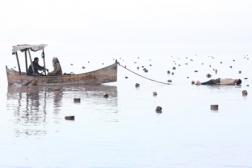
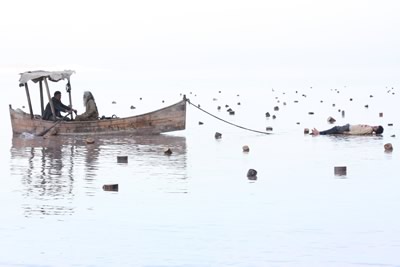
Shot on location at Iran's desolate salt lake, Lake Urima, there are layers to this film that I was honestly unable to immediately peel back, but that has, surprisingly, only made it so much more emotionally powerful. Director Mohammad Rasoulof, who while I was sitting and watching his film in one of the film festival's most luxurious venues sits in an Iranian jail cell (more on that later), has woven a time bomb of an allegory that unravels the longer it sits until finally going off all at once.
The film follows Rahmet - a collector of tears. He rows his boat from island to island in this great salt lake and captures in a glass vase the drops of those suffering or those wracked with sorrow. Early on in his journey he takes on a boy who says he wants Rehmet to help find his father.
As they journey together the circumstances that lead to the collection of tears become increasingly unsettling. A mother weeps after her daughter is set to sea as a sacrifice for rain. A boy weeps after sustaining injury from a stoning. An artist who refuses to say the sea is blue cries after having his eyes flushed with the salt water of the sea. Rahmet remains quiet through all of these visits and even casting the first, albeit smallest, stone at the boy. His face does more speaking than his mouth. His eyes at time show reluctance, pity, horror, and sorrow.
Each stop is another metaphor reflecting upon extremism in the director's home country. Doing some investigating after viewing the film in order to reach a better understanding I learned that Rasoulof and one of the film's editors, Jafar Panahi, was arrested in 2010 and continues to sit in a jail cell. His crime? Producing an "anti-regime" film. The sentence is six years imprisonment and a 20-year film making ban.
The most poignant scene comes in the last ten minutes when we're shown the true purpose of the people's tears. When viewing White Meadows it's best to leave a couple hour afterward open for reflection or discussion. As it sits, and even as I write this four hours later, the film will continue to unfold in your mind. I called it a time bomb in the opening paragraph, because it wasn't until I had time to digest the film hours later that my eyes prepared a sacrifice for Rahmet's bottle.