



Sampat Pal Devi and her vigilante gulabi (pink) gang, clad in beautiful cerise saris, take to the streets and fight for women in Northern India's poor Uttar Pradesh district in this powerful documentary from Kim Longinotto.
Women all over India seek Sampat's assistance, turning up on her doorstep with horrific tales of sexual and domestic abuse. She often takes the women in, worrying about how to stretch the rice and bed rolls later. Sampat is a fiery middle-aged woman, who is not afraid to confront a man accused of raping his daughter-in-law, or march into a police station and demand to see a prisoner.
It's hard not to be emotionally affected by this documentary, especially after hearing accounts from the female victims. They have experienced a level of loss and injustice that is hard to imagine. The complex social caste structure in India is the root of many of the problems for the women who seek Sampat's help. Many are from the lowest caste system, dubbed the "untouchables." Renu, a 15 year-old girl from the untouchable caste, is ready to throw herself under a train because of her relationship with a timid boy from a higher caste. His family eventually convinces the boy to return home, after warning him that his relationship with Renu will cause a "stain" on the family and prevent his sister from a future marriage. Sampat manages to convince the heartbroken Renu, who has already divorced her husband and escaped from a father-in-law who raped her, to live with Sampat and her family.
Sampat also intervenes for another untouchable girl, 14 year-old Rekha, who is pregnant after running away with a boy from a higher caste. Her lover has abandoned her after mounting social pressure from his family about Rekha's social status and pregnancy. In India, the consequences can be much more devastating than gossip and whispers. The shame of pregnancy for an unmarried woman is so severe that the family will most likely kill the young woman unless Sampat convinces the two to marry. Watching the two teens marry in a hastily-arranged ceremony, complete with an audience of the gulabi gang in bright pink, they look more like two children playing dress-up, carefully averting their eyes as they place brightly colored garlands around their necks.
When Sampat Pal Devi is onscreen, you are mesmerized by this short Indian woman in her colorful saris, who lashes out at abusive husbands, lazy police officers and at her own oppressive former life. She reveals that she was as a child bride who was regularly beaten by her husband's family. When we first meet Sampat, she lives up to her reputation as a fiery vigilante, angry at her country's treatment of women, especially those from a lower caste. Towards the end of the film, as much of the Play Circle audience gasped at the horrific revelations of abuse, I'm sure many of us wondered how Sampat can stay so strong when surrounded by tragedy and extreme poverty. After a fight with her partner Babuji, we start to see signs of stress as Sampat breaks down at the thought of losing Babuji.
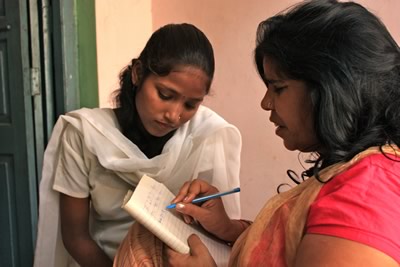
In a final scene, Sampat cries with Renu as Renu vows to become educated so people will value her as more than just an untouchable. Watching Sampat wipe away Renu's tears with her own scarf is a vision I still have in my mind hours after leaving the screening, along with a new awareness of the plight of women in India.
Pink Saris screens again at Play Circle on Sunday, April 3rd, at 7:45 PM.