



“What we've got here is the worst environmental problem in the United States. Words can't describe it, pictures can't fully capture it, so this documentary attempts to bring understanding to what happens to the people, the landowners, and the land in a place that has had a boot heel to its throat for its whole life.” – Matt Myers, director of Tar Creek.
Discovered in the early 1900’s while digging out a water well, Tar Creek became the largest producer of metals including zinc and lead in the world for over a decade. Named for the creek that runs through the area in the northern-most part of Oklahoma, the mines were most dominant in Pitcher, Okla. and on the Quapaw Indian reservation. Most of the metal for World War I & II came from the mines surrounding Tar Creek. Once the excavation was complete, the mines were abandoned and the results left to future residents of the area.
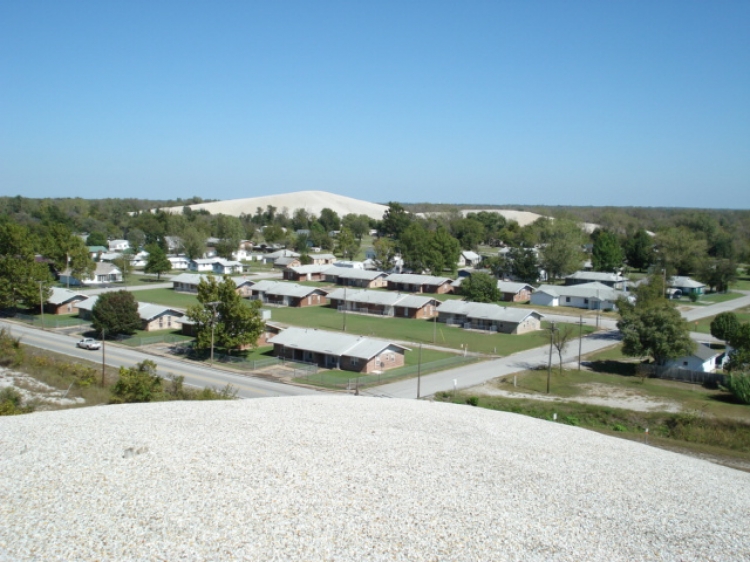
For every ton of ore that was extracted, 16 tons of refuse was left. Mountains of gravel and dust still remain, some reaching a dozen stories high. These “chat piles” litter the landscape. By comparison, piles the size of a house seem downright small and reasonable.
This gravel and dust is extremely high in lead and other contaminants. A study in the area found that 43 percent of children born and raised in the area had elevated levels of lead in their bloodstream. This can cause learning disabilities and obesity.
While chat piles dominate the landscape, in other areas the land caves in as the shell above a mine gives way. 150-foot deep holes spring up overnight. Miners would dig until they saw the roots of trees explains one resident. Another discusses how he ran as he watched the earth give way beneath his business.
In 1983, the EPA declared Tar Creek the top environmental disaster in the country. Funds flowed into the city to try to solve the problems. Still, spending $80,000 per resident to replace layers of topsoil as each house as mountains of contaminants remained did little to help.
A plan by the governor to provide funds for residential relocation was approved in 2006, and soon the town of Pitcher will be abandoned. Still, problems remain with residents receiving fair compensation for their land and some that do not want to move at all.
“It’s not an environmental problem, it’s a people problem,” explains one resident.
Tar Creek is a compelling documentary that takes a detailed look at the history and problems of the area. Before the movie began, those in attendance were informed that the Wisconsin Film Festival staff had received the 92-minute version of the film rather than the 75-minute one described in the guide. While the film repeated itself at times and had a bit of unnecessary information, I gave it a 4 out of 5 on my Steep & Brew ballot. I guessed (and hoped) that the version we were supposed to receive was a bit more tightly edited than the one we watched, and gave the director the benefit of that.
Read-only archive. Accounts and comments are unavailable. Browse the archive.
featured