



Disney has such a reputation for corporate-controlled experiences that the prospect of a Disney insider making a documentary about their animation department's revival -- from the declining days leading up to 1985's "The Black Cauldron" to their greatest modern commercial triumph with 1994's "The Lion King" -- sounds like a one-way ticket to papsville. And from its opening home-movie frames, it's clear Don Hahn's "Waking Sleeping Beauty" will be a velvet-glove treatment, not a bloodletting exposé about how a corporation reasserted dominance. Except ... no one cuts as deeply as the one who knows you best, and for "Lion King" producer Hahn, Disney is practically family. So while the movie is absent the invective you might expect from an outsider's muckraking, Hahn succeeds in drawing you in so well that the movie's turbulence is more affecting for being held close to its chest.
What turbulence? While the documentary's bookend years trace an aesthetic and commercial resurgence, they more precisely correlate to the tenure of an executive team, from the hiring of Disney CEO Michael Eisner to the departure of animation VP Jeffrey Katzenberg. Those two, plus new CFO Frank Wells and scion Roy Disney, shook up a commercially flagging ailing ink & paint department -- Disney animation's commercial nadir was "The Black Cauldron," and Eisner and Katzenberg were onboard to watch it fail so spectacularly that it came in second opening weekend to ... well, I wouldn't want to spoil one of the film fest's sickest jokes. Suffice it to say that the very Disney brand was threatened, because many at the company believed that without an animation department the company would lose its soul, and without better product than "The Black Cauldron" there wasn't going to be an animation department.
As much as the turnaround at Disney might rightly be credited to the new suits, we don't witness any kind of radical management about which a bestselling business book might be written -- just careful oversight, the installation of quality middle management and reliance on the animators themselves to do what they do best. (Among the famous names we see in ink & paint are Don Bluth, Tim Burton and John Lasseter, though all left before the department's fortunes reversed.) There was, of course, the threat of competition, not only from without, as when Bluth spun off his own animation company, but also from within, when the technically audacious "Who Framed Roger Rabbit" was animated at Disney, but not by their feature animation department. It took all those ingredients for the department to choose a long-dormant concept -- Hans Christian Andersen's "The Little Mermaid" -- and pursue it with new vigor.
Of those ingredients, however, one was spicier than the rest: lyricist Howard Ashman, who collaborated with songwriter Alan Menken to revive the tradition of the Disney musical. Ashman's devotion to the form meant he got passionately involved at various levels in the production process, and Hahn shows how his songs spurred the animators to keep up with him. Of all the big personalities in the movie, Ashman is the most magnetic, and "Waking Sleeping Beauty" would be compelling simply as a tribute to him.
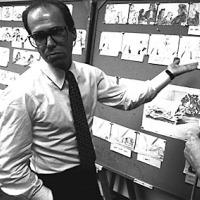
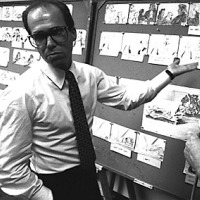
The home runs whose boffo box office created this idea of the "Disney Renaissance" -- "The Little Mermaid," "Beauty and the Beast," "Aladdin" and "The Lion King" -- warrant no more of Hahn's attention than the base hits from this period -- "The Great Mouse Detective," "Oliver and Company" and "The Rescuers Down Under" (which many forget was actually released after "The Little Mermaid") -- and it's nice to see that egalitarian approach. The documentary is largely home-movie footage shot in their offices, intercut with the occasional news broadcast, movie clip and, of course, sketches made by the animators to illustrate their plight, and what emerges is a portrait of creative professionals trying their best to serve the work.
But as "The Lion King" was thriving, the management team was collapsing, and kudos to Hahn for making us care. Again the question arises of, how sharp do we want a documentary's fangs to be? Hahn shows the executives' dissolution mostly through public moments, letting the seething subtext speak for itself. There's doubtless more explosive material out there, but not only does Hahn's approach work beautifully, his reasonable treatment was enough to get Katzenberg and Eisner on the record to talk in voiceover about those days. And while, again, the result isn't piss and vinegar, neither is it Kool-Aid. For those who love movie history, "Waking Sleeping Beauty" is a perfectly mixed refreshment.