



 View originalMatching time: A man lies about having an important job when he's actually unemployed, and when he can no longer maintain the fiction, he:
A) gets pretty despondent before admitting the truth
B) nearly murders his children before he's stopped by the police
C) kills his wife, kids, parents and dog before burning down his house
Which medium would would you associate with each ending?
1) Feature film
2) Hourlong television drama
3) Real life
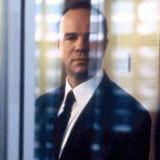
You might guess that the movie would be the most gruesome, and real life the most pedestrian, but that's what's so strange about the case of Jean-Claude Romand, who killed his family and nearly killed himself when his two decades of employment with the World Health Organization were discovered to be fictional. Law & Order: Criminal Intent reimagined his story in its first season, along the lines of option B above. But while a TV show would be expected to soften the blow (because the cops needs something to succeed at, such as keeping the kids alive), it's surprising that it's the feature film -- Laurent Cantet's 2001 Time Out [pictured] -- that backs off the most, removing all but the hint of violence from the story while diving deeply into what motivates such a sham. It's a case where the soft touch is the most gripping, however -- Time Out is one of the best movies of the decade, and it's definitely worth catching on the big screen. (Fri., 7:30, UW Cinematheque, free)
Why see it in a theater? Because it's slow. I'm not the kind of filmgoer to throw a fit about slow movies, but many viewers are, and nothing magnifies the narcotic effect of a slow movie like watching it on your couch. (Plus, it's in French with English subtitles.) Seeing it projected, you're just more alert to the experience, and Time Out is the kind of thoughtful, elliptical movie designed to reward that alertness. The movie is beautiful in its anomie, focusing its camera as much as on sterile office architecture as snowy Alps to demonstrate the isolation and longing of Vincent (Aurélien Recoing), who drives around and sleeps in his car when he's allegedly working for the UN, and makes money by conning his friends and family into sham investments. The tension the movie generates as you realize the investors can't be fooled forever is intense, and it gets worse as Vincent creeps into more obvious crime. The obvious Hollywood analog to the film is Falling Down, but Time Out is many times richer and more rewarding in its psychology. The dichotomy of Vincent's desire to maintain his upper middle class existence while reckoning with his devaluation and disinterest in the working world is palpable without being spelled out every step of the way, and Recoing is brilliant in the role. And that ending! It's a finely observed movie and certainly a feather in the cap of the Cinematheque's globalization series. Also at UW Cinematheque this weekend: Mikio Naruse's Lightning (Sat., 7:30, free) and the Of a Feather program of bird-oriented short films (16mm and video, Sun., 7:30, free).
Speaking of best movies of the decade, David Cronenberg's A History of Violence opens this week at all the multiplexes, and its story of a small-town family rocked by an act of violence and its aftermath is getting ladled with plaudits -- even a critic who calls it "hammy" and overpraised also calls it "an absolutely sensational piece of filmmaking ... staged and shot and acted and scored like nothing else this year."
Filmmaker James Spione is at the Orpheum Wednesday to inaugurate a two-day run (that could elongate come next week) of American Farm, his documentary about a family farm with no family members interested in running it -- Spione included.
Speaking of the Orpheum, Wallace & Gromit: The Curse of the Were-Rabbit has a paid sneak preview there Tuesday. And speaking of that, we're in the middle of a little animation renaissance: Last week Corpse Bride arrived in Madison, next week The Curse of the Were-Rabbit opens everywhere, and to bridge the gap is a weekend-only revival of Howl's Moving Castle, the latest Hayao Miyazaki hand-drawn extravaganza, at the Memorial Union (Fri-Sun). It's been three years since the last Miyazaki arrived stateside, and Corpse Bride and Were-Rabbit are the first stop-motion-animated features in five years. In a year where the other animation options have been Madagascar, Robots, Valiant and the upcoming Chicken Little, all computer animated, as well as Pooh's Heffalump Movie ... well, it makes the gaps I just mentioned seem all the longer. Also at the student unions: Almost Famous (DVD, Sat. midnight, Union South, free), My Favorite Wife (16mm, Mon., 7:30, Memorial Union, free), Brother's Keeper (DVD, Wed., 7, Union South, free) and, in another delicious 35mm delivery from the International film committee, Wong Kar-Wai's Days of Being Wild (Thurs., 7:30, Memorial Union, free). Expect a bunch of people to be turned away at the Play Circle door.
One more note on the Orpheum: The Rocky Horror Picture Show is back at midnight Saturday.
Madison is one of the few geek enclaves in the US not to have had a public preview screening of Serenity over the summer. Serenity is the follow-up to Buffy the Vampire Slayer creator Joss Whedon's ill-fated TV show Firefly, which was basically a western in space. Firefly was axed by Fox in short order before going on to have a second life on DVD, and so for Universal to put $50 million or so into a sequel to another studio's TV show ... well, it's an act of faith in Whedon's ability to draw a crowd larger that just his adherents. I'm sure many are dubious of going to the multiplex to see hours 15 and 16 of a series they likely never watched, but then again, back in 1977 Star Wars did tidy business for itself with a similar in medias res story -- and everyone called it a space western, too.
In 1993, Miramax, having just been acquired by Disney, began one of the most prodigious Oscar runs of all time, with that studio having at least a partial stake, and almost always the major stake, in a Best Picture candidate or two every year since. The Piano, Pulp Fiction, Il Postino, The English Patient, Good Will Hunting, Shakespeare in Love, Life is Beautiful, The Cider House Rules, Chocolat, In the Bedroom, Chicago, Gangs of New York, The Hours, Master & Commander, Finding Neverland and The Aviator were all blessed -- by which I mean futzed with -- by Miramax brass Harvey and Bob Weinstein, a pair of producers considered both inspired and infuriating by their collaborators.
But now the Weinsteins are leaving Miramax (and its sub-subsidiary Dimension), and as a grand finale -- or at least as a prank on par with the exiting Clinton administration removing all the Ws from White House keyboards -- they're taking every problem movie that's been sitting on their shelves and liquidating them into a theater near you. The Great Raid, The Brothers Grimm, Underclassman, An Unfinished Life, Venom and, opening this weekend at Westgate, Proof are among the films that have opened since August that Miramax didn't believe in enough to, you know, release. Many of them have been finished for a year or more, including Raid and Grimm. Proof casts Gwyneth Paltrow, Jake Gyllenhall and Anthony Hopkins in a Pulitzer-winning play, shares a director with Shakespeare in Love, and was supposed to be released last winter; An Unfinished Life stars Robert Redford, Morgan Freeman and Jennifer Lopez, shares a director with The Cider House Rules and was completed in time to have been released for Oscar consideration two years ago. For Miramax to treat such wheelhouse projects with that kind of disinterest makes them suspect indeed, although maybe you can't infer dubious quality from that as much as dubious ability to be successfully marketed -- a problem borne out by the subsequent underperformance of each of the movies.
Last weekend for the drive-ins, folks: Jefferson and Wisconsin Dells are already closed, leaving only Just Live Heaven and The 40-Year-Old Virgin at 7:30 in Monroe.
Opening this week: The Greatest Game Ever Played, which looks like The Legend of Bagger Vance with one fewer black person; Into the Blue, which is so shameless about getting Jessica Alba and Paul Walker into swimwear that its diving/looting plot is doubtless an afterthought; Oliver Twist as adapted by Roman Polanski -- I've heard good and bad reviews, but the only one-liner that made me chuckle was "Consider yourself ... a-sleep;" Pure, an urban British drama of family and drugs; and American Farm, A History of Violence, Proof and Serenity, all mentioned above. In Her Shoes sneaks again on Saturday.
Opening at the budgets: The Cave and The Dukes of Hazzard.
Movie times (Isthmus, Madison.com)
UW Cinematheque (4070 Vilas Hall, 821 University Ave.)
Wisconsin Union Directorate (Memorial Union: 800 Langdon St., Union South: 227 N. Randall Ave.)
All films 35mm unless noted.